Frozen

I know it’s my tendency, and that of other beer writers to focus only on beers that pass personal muster: new world IPAs, sour beers, perhaps discovery of a well hidden mild or brown ale and certainly not laaaager, dear boy (well, not the factory brewed lager anyhow). And if they (read: ‘I’) do write about lager it has to be ‘proper’ lagered beer; ideally all malt; hop restrained, double decocted and most, most, definitely lagered for a minimum of a month, ideally in a Bavarian or Bohemian cave or troglodytic vaults below a castle.  For the record they do exist, and yes, the beer is better (in the main).

When I set off on the Tinted journey though I wanted to reflect a personal stance in my writing. It was, and is, ‘pro beer’.  That is to say, whilst I may not enjoy or condone the beers and brewing practises of some breweries, typically those focused on a volume growth agenda and therefore targeting efficiency and profit over quality, integrity and craft, I wasn’t going to slag them off either. At least, not unless there was a clear rationale, a basis of a subjective truth; a deliberate contradiction in terms, I know. Goodness, I worked for a national, now multinational brewer for almost two decades and hypocrisy stinks: I am free to vote with my wallet and tastebuds and that’s what I have chosen to do. At the end of the day though, for a normal person, beer is beer is beer.  If people like me piss in the proverbial pot it pollutes the whole thing.

And today is one of those days that justifies my stance.  I am in the Canary Islands.  My wife is swimming a staggering amount of lengths in the pool outside; the kids resting under a metaphoric shady tree for it’s 29 degrees, with a cooling breeze off the ocean, that oftentimes whips into violent, short-lasting squalls, hurling inflatables, whistling at windows.  The landscape is stark but not bleak: this island is volcanic, the rock is young, black basalt, with deep holes where the gas and air hissed out as it cooled. Ever ingenious, man has worked with it; walls contrast in white; plants are tolerant of both drought and malnutrition, houses are concrete slabbed & whitewashed, unheated, airy. Water is scarce compared with our blessed isles further north. In short, you perspire just walking to the shop at 9am; air conditioning is blessing, a dip in the pool more so; a swim in the sea most of all.

That’s not to say that you couldn’t enjoy more beers here.  Sadly perhaps, I love shopping on holiday (or on business trips away), it’s a short cut to local culture. And the beer range always depresses me around the mediterranean shores just as it does here too. Quick brewed, pale beers, 50 shades of magnolia. Lager by name but rarely lagered by nature.  Yet, in an environment where you sweat just sitting outside, there’s something right about them.  The alcoholic level isn’t debilitating; refreshment is promised and is delivered.  As I type, I am drinking a Cerveza Dorada. It’s 4.7% ABV and it proclaims on the front, so I assume they deem it important, that it’s “100% malta”.  Our apartment had some ‘Tropical’ beer steins, so I popped them in the freezer.  Heavens! Heracy! A factory brewed beer, chilled to nut numbing temperature in the fridge and then poured into a frozen glass.

IMG_2181_fotor

But here’s the rub.  It’s great. The glass is exciting (no, really), steaming as the ice formed as I drew it from the freezer drawer; pouring the beer, you could hardly make out the amber body for the frostiness on the outside, I feared my lips would meld onto the rim. But no, it melted away and left gossamer strands of ice on the head of the beer. A beer which was OK by the way:  it doesn’t profess to be an earth shatterer, and I wasn’t seeking perfection.  It was a good beer, on a great occasion. And it was… right.

Godisgood

The wonder, the magic of yeast. The smell? Beer, fresh lemon peel and a coat of wet emulsion.

David Preston's avatar

One of our many rituals is Friday Pizza Night. It’s a signal; the end of the working week is here. An end to weekday patterns of snatched lunches or mismatched family meals. Everyone likes pizza: sitting round; a big knife; chopping big wedges unevenly, roughly, indecorously. From time to time, when time allows, we make fresh bases. Strong white flour, sieved and dusty, a fine veil drifts down by the morning. Greeny-yellow olive oil; flakes of Maldon salt and the magical yeast. To mix, we grab everything together in a claw, like a digger’s grab, pinching and squeezing, mud-flat mix oozing between fingers and thumbs. Not all of us love the kneading but I do and Em does too. Giving it some, elbows out, top teeth gently pressing into bottom lip as she pushes and folds and shoves and pulls.

Em had a pizza party for her birthday.  We made five times the normal…

View original post 228 more words

Flatlanders

‘Bucket Lists’. Inherently morbid, Gothic things, Bucket Lists. I managed to exorcise them from my thoughts for many a good year but alas, they kept on scritting and scratting away, finally breaking through and floppily landing, like a dark, flappy-winged and rather sadly pathetic Angel of Doom into my Grey Cells. Must be age. They’re pervasive too, especially, and strangely I find, in the world of beer. If ‘The Good Beer Guide’ is a Penguin Classic, ‘100 Beers to Try Before You Die A Mournful And Slow And Agonising Death’ is the Necronomicon.

But there we go, sometimes you have to swim with the tide and Bucket Lists have broken through. I’ve started to mentally compile them. Six weeks in New Zealand. Return to Iceland. Circumnavigate the coast of Britain. Explore Australia. Ride around the North Sea*.

Yet there’s a more persistent – and seemingly banal – one: to explore The Netherlands. Oh, I grant you, it’s hardly one of Eight Wonders of the World. And that’s rather the point. Holland, if I may call it that for brevity’s sake, really shouldn’t be. It is one of the most civilized societies hewn from the least promising beginnings. Most of it lies below sea level, swampy river deltas and the crushing weight of the North Sea held back by some earthen ditches, a few industrial-scale pumps and a little lad with a fatigued finger. To the north, Friesland, was once a collection of islands; around Amsterdam, enormous lands and new cities sprang out from the sea bed of the Zuider Zee. All through damming and pumping.

And whilst it’s a country I have travelled to frequently, it has invariably been on business and the stereotypes persist: laid-back urbanites with their perfect English, sit-up-and-beg bikes and relaxed attitudes to prostitution and soft drugs; outside the cities, rural cheese-makers, wearing wooden clogs and growing tulips under glasshouses you can see from space. Their Belgian neighbours complain that whilst the Belgians have the flair, slightly barking creativity and variety, the Dutch have focus and effectiveness. Take cheese: two sorts, Edam & Gouda, sold the world over. And take beer: Heineken and Grolsch, pale lager beers, sold the world over.

Of course, the truth is different. Just as the Dutch also make wonderful Ewe and Goat milk cheeses (or even smoked Gouda with caraway seeds), so too do Dutch brewers make a wider range of beers. When I worked for Grolsch a few years back, they brewed a range of seasonal beers – de Vierjaargetijdten – which proved that there was more to them as a brewer than pilsner and swingtop bottles. The main variant was Herfst Bok – Autumn beers being a popular category in Holland. Grolsch’s was sweet and malty. Gulpener’s was more hoppy with a green hop-leaf character. Brand’s was dry. There was a winter warmer, Winter Vorst,  a citrusy, grassy summer beer, Zomer Goud and my favourite was the well balanced and only marginally more pronounceable, Lente Bok, a spring beer with a strong malt backbone, a lemony freshness and a warming alcoholic kick.

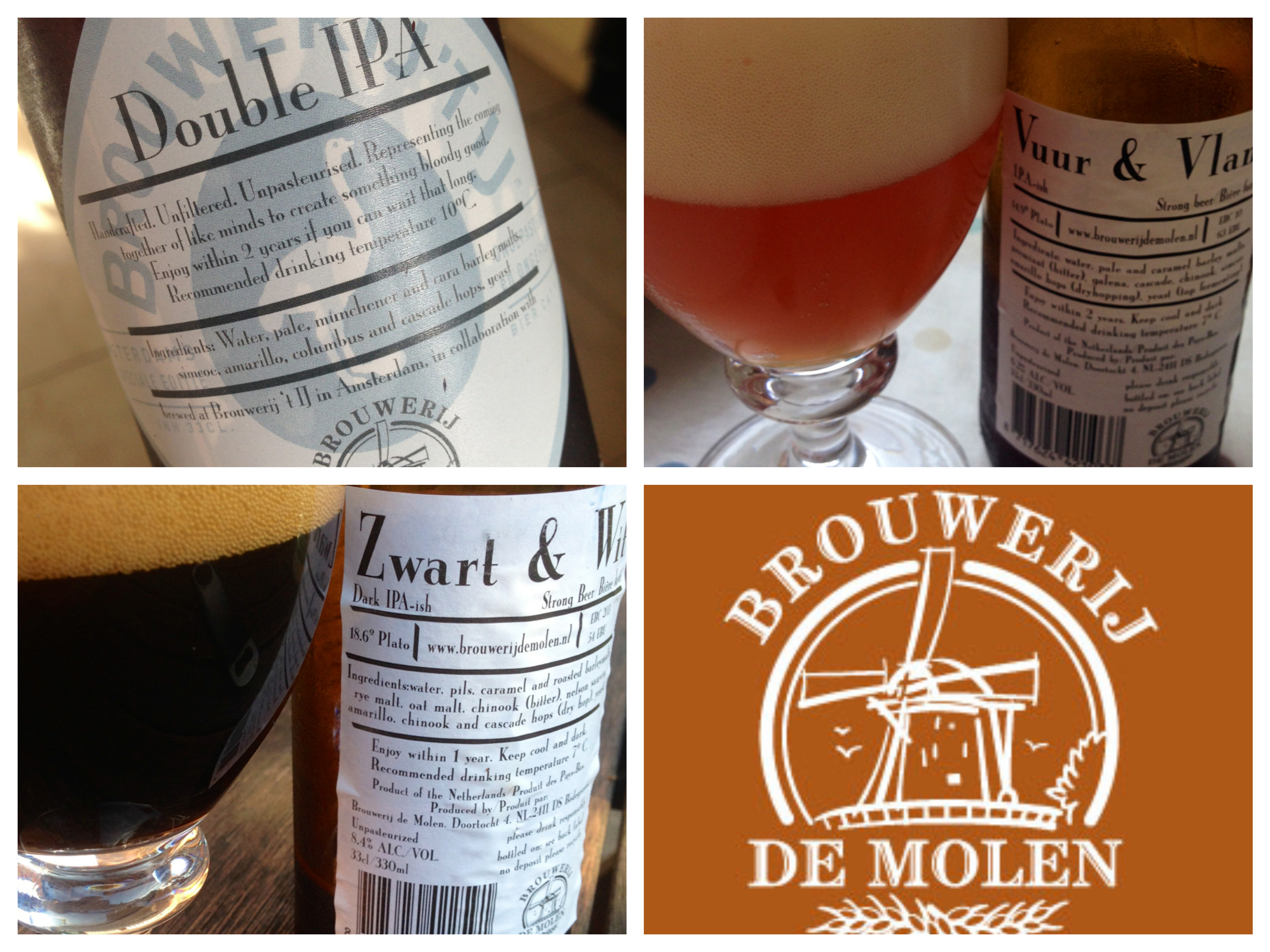
Today, the truth is even more different. Today, craft beers in Holland are blossoming and the craft brewery Grand Daddies, Brouwerij ‘T Ij and Brouwerij de Molen are making an impact outside of their home country. I recently got hold of a couple of de Molen beers and another, a collaboration between the two. T’Ij is based in Amsterdam, a ferry hop across the water from the main train station. If you go to Amsterdam, ignore the ‘delights’ of the Red Light district and get over to their beer garden, it’s fantastic. I’ve not been for a few years, but their beers were always characterful and packed some oomph – their website today reveals a wider range – but all looking as beautiful as I remember. De Molen is south of Amsterdam, in Bodegraven, in the cheese-wielding, tulip-waving farmlands at the centre of the triangle formed by Amsterdam, Utrecht and Rotterdam. And to stereotypical form, the brewery is both named after and is situated in, a windmill.

Here is the evidence that Dutch brewers are now doing variety as well as efficiency, nettle clad yarg not just industrial pseudo-Cheddar. The collaboration between ‘T Ij and de Molen is a Double IPA; a deep, caramel brown beer with a cream-tan head, persistent if not profuse. On breaking the crown, a crisp, malty biscuitiness is foremost, then layers of hop, leafy, green, grapefruity. And if the Dutch deserve their reputation for thriftiness, it was not in evidence here, with four hops – Simcoe, Amarillo, Columbus and Cascade – but not overplayed at all, a well balanced beer working off a dark malt base. A double IPA by name but done with the best of new world hoppy swagger and old world drinkability (and at 9% too – you’d probably not guess). Vuur en Vlaam is not only a great beer – not only, in fact, a terrific beer – but it also enjoys a name to make it famous. Fire and Flame. Sturm und Drang. Cagney and Lacey.  Four hops aren’t enough here; it is intensely hopped with six varieties yet, again, retains a quality so often missing in new wave IPAs, a satisfying moreishness. I wish I’d bought more.   And finally Zwaart en Wit, black and white. An 8.4% dark IPA. This is not just a dark beer, but jet black with an oil spill head; a head that was effusive with a loose bubble, with roast aromatics leaping up from it. This was perhaps more fire and brimstone than the previous beer. But no: it is handled dexterously: with only a light roastiness to smell, and whole hops bursting through not subdued and not overbearing, and even a juicy citrusiness evident as well. To taste: a happy bitterness, not overdone with a roasty dryness. Three wonderful Dutch beers.

Going back many years, Grolsch had a ground breaking TV campaign. ‘Vakmanschap is meesterschap’ it pronounced: ‘craftsmanship is mastery’. Now it seems, that mantle has moved on.

de Molen_fotor

*This is not as wet as it sounds. You basically follow the east coast of the UK, through the Orkney’s and Shetland, down Norway and Jutland and back around through Germany & Belgium. Ferries for the moist bits, clearly.

© Beer Tinted Spectacles, 2014

Where the wild things are

The first time I went to New York everything was so familiar I managed to convince myself that I must have been here before. I hadn’t. Years of episodes of Taxi, Friends, big budget movies, low rent movies and the persistent ability to be at the centre of global news makes it so familiar. From the ridiculous to the sublime perhaps, but I feel the same way about Brussels and the Payottenland, the low, hedge lined, deep ditched farmlands out to the west of the Belgian capital. I’ve been only twice, both fleetingly.  The first time was a road trip, passing through whilst heading elsewhere and pausing only on the outskirts of the capital. The second was a business trip, where any memory was wiped clean by one too many devilish beers in La Mort Subite.  

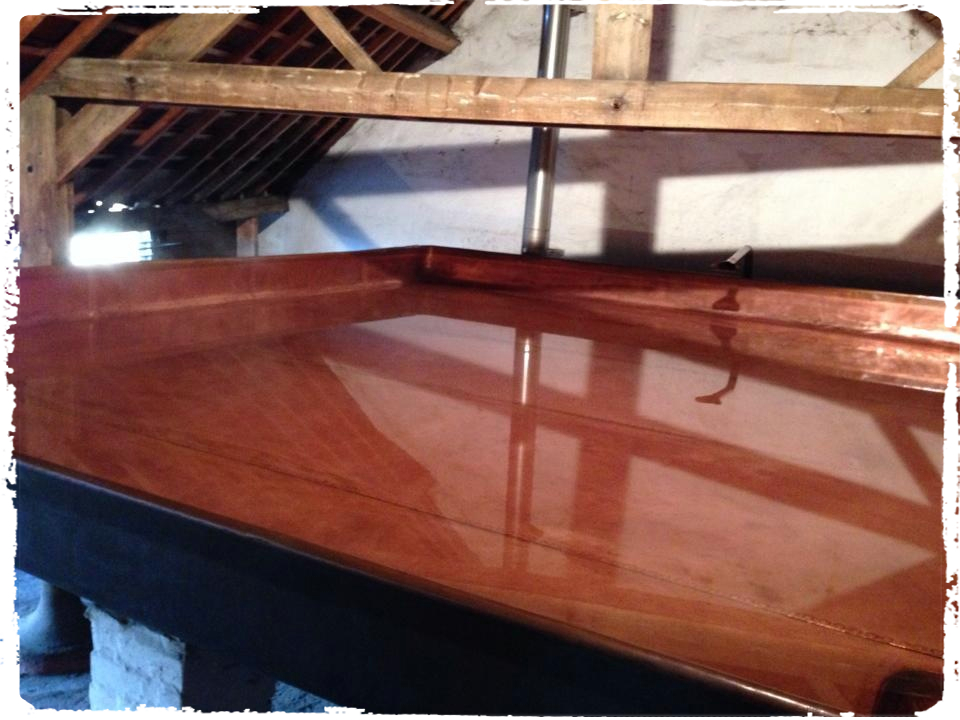
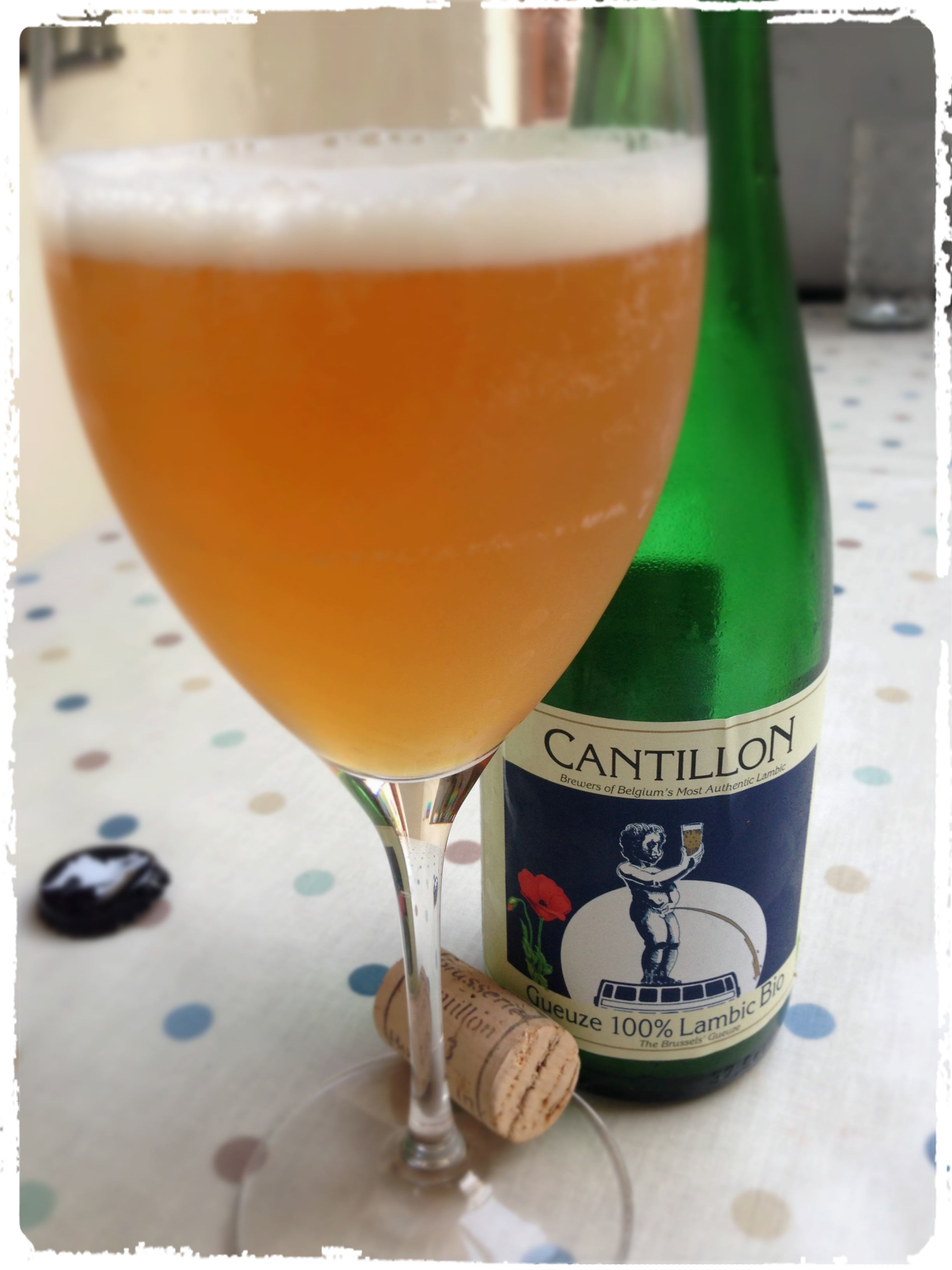
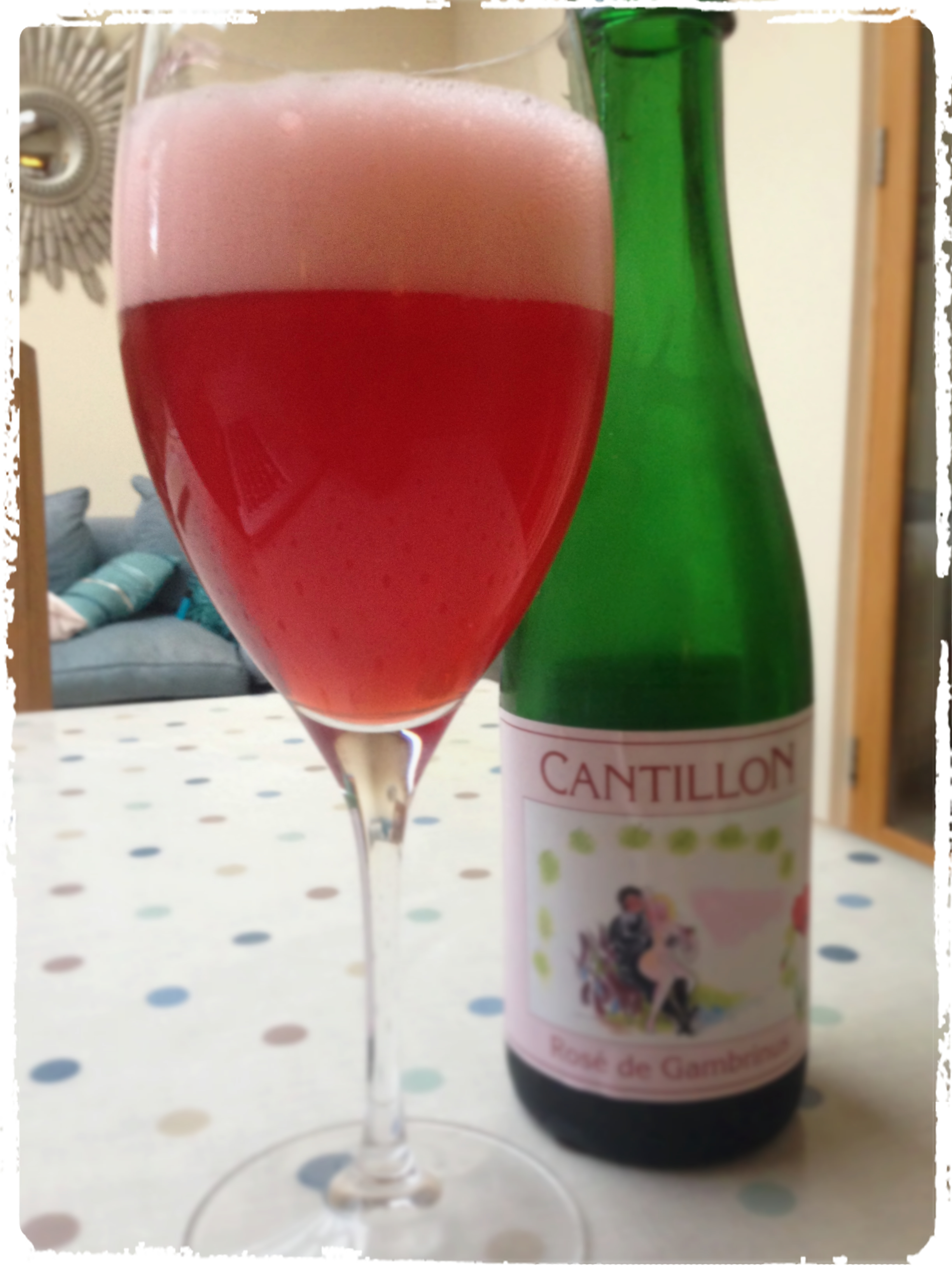
Yet it all seemed so familiar. And again, this was the case when I received some Cantillon lambic beers from Beer Hawk last week: the Gueuze, the Kriek and the Rosé de Gambrinus framboise. I’ve not been to Cantillon yet, but ex-colleague, friend and Edinburgh brewer Bob Knops has – some of his photos appear below. The product shots are mine: strange how even the packaging can link you to a place. These are the bottles of gourmands. Of people who care for tradition and taste above function and form. Thick, heavy weight bottles, fortified bases to withstand the pressure of refermentation in the bottle; wide brimmed crowns, levered off to reveal a cork seal below. Unnecessary? Antiquated? Yes to both if you wanted to argue it that way, which underlines how important these beers are.

Cantillon brews in a very traditional way, even for lambic beers; making a gloopy, turbid mash of malted barley and unmalted wheat; a prolonged and vigourous boil with the addition of aged, cheesy hops, required not for their aroma but their antiseptic band-aid protection. And then inoculation of the wild yeasts begins, as the wort is put in a broad and shallow coolship, under the roof beams of the brewery, to let nature’s playthings have their saucy way with the wort’s sugars.  For the base lambic, the beer is moved into oak barrels, where it goes through a journey of staged fermentations, not just with brewing yeasts, but wild yeasts and bacterias that produce a wild array of different flavours & aromas. These fermentations are only complete two years later (and potentially longer).

The Gueuze is a blend of young (roughly two year old lambic) and older, 3+ years,  lambic. The older lambic is reinvigorated by the sugars remaining in its younger sibling and refermentation begins anew. The result is a sparkling beer (unlike lambic, which like traditional cider is all bit still).  Immediately on prising out the cork the wild aromas fly out: winey, ascetic, and vaguely pooey, a mucky straw smell like a remember from the floor around Reynolds farm when I was younger. Unattractive? The description sounds it I’m sure, but the words do not do justice to the aroma which is endearingly attractive – surprising, and complex.  To the eye, it was a hazy yet vivid gold, with a profuse head that quickly dissipated to a thin velvety sheet atop the beer.  Carbonation was visible and audible, and felt too, with a tingly sizzle in the mouth. The taste is led by a coating dryness, quite sour but appetising and finished with a surprising touch of lemon peel.

The Kriek lambic was a delight too: building on the flavours and aromas of the Gueuze but overlain of course with the marzipan nuttiness of cherry stones and the plump berry fruitiness of the cherry flesh. The beer was burgundy red in colour, with a pink, sustained, head that formed energetically. This was a refined beer: which in a ironic twist tasted fresh and young despite its ageing. The playfully named Rosé de Gambrinus is the real jewel.  Whole raspberries are steeped in two year old lambic only. Compared with the other two, at first I thought this beer was thinner, less complex – but on continued drink, so I realised what an elegant, refined beer it is – more a champagne than a Rosé. To smell, there’s plenty of delicate berry fruit, yet it’s not over sweet and has a clear, corky sourness too. The beer had taken the ruddy hue of the raspberries with a lighter, pink head than the Kriek and a strong, excitable, effervescent carbonation. To taste, the beer was neither as dry nor as punchily sour as the other two, but it was sour all the same – drinkably so. The raspberry sweetness – the little there is surprisingly – is superbly balanced, just sweet enough to pull you back for the next sip yet with a complementing, ascetic bite to complete the circle and quench. It’s nothing like sweetened beers that are increasingly popular where the sugar has been used in the fermentation. In fact it’s nothing other than an excellent framboise; an excellent beer.

I must go there, to this rural brewery in the the city. But when I do, it’ll feel like an old friend I’m sure.

IMG_0958_fotor

IMG_0961_fotorIMG_0960_fotor

IMG_1935_fotor

IMG_1941_fotor

IMG_1946_fotor

© Beer Tinted Spectacles, 2014
First three photos,Bob Knops. http://www.knopsbeer.co.uk

Born on the 18th of April

The 4th July is a special day on the Old side of the Atlantic; it’s the day my eldest daughter was born. Apparently, it’s of some significance on t’other side too, being the day when (it is generally agreed that) the Declaration of Independence of the United States from Great Britain was adopted by the Continental Congress. For a short time we played with the idea that my daughter should perhaps have a suitably independent (middle) name: like Freedom or Liberty. Then we realised that she would be commemorating those darned Yankee Rebels all her life, which, well, was jolly well not on. It would, I later learn, also mean she was commemorating the day that three of the U.S. Founding Fathers, John Adams, Thomas Jefferson and James Monroe died. All of them, remarkably, passed away on that day. Party poopers. A later President, Calvin Coolidge, on the other hand, also added some mid-party entertainment by being born on the day (not in 1776, I should add).

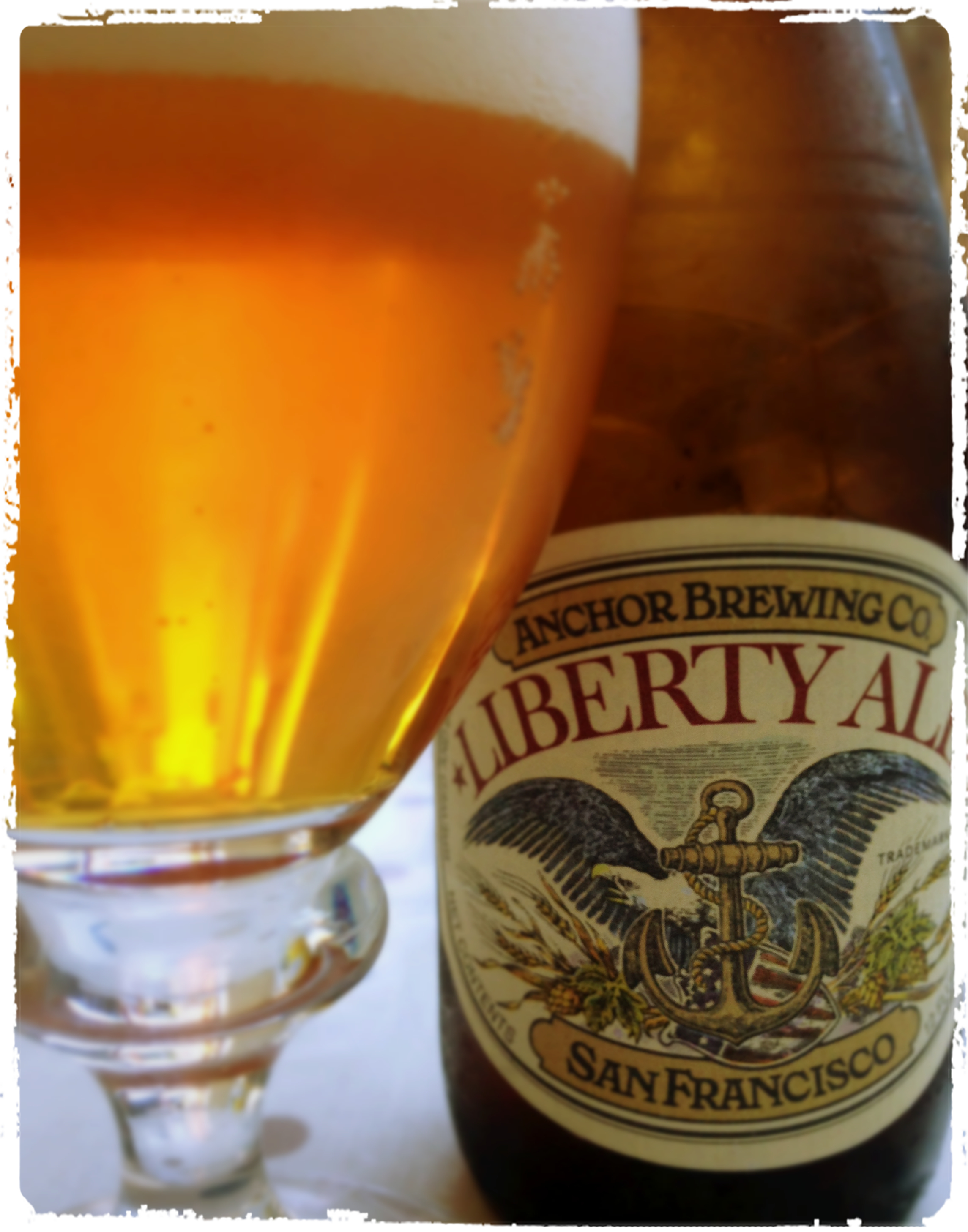
However, there’s an American Beer Day that deserves to be celebrated more: the 18th of April. This was the day in 1975 when the Anchor Brewery brewed a beer that would kick start the U.S. craft beer movement, and in particular a beer style, that of the American Pale Ale. Anchor, in fact describe Liberty Ale on their website as an IPA – if it is, it is more in the English tradition, except for the incredible, resinous, peppering of hops. Liberty Ale remains not only a historical classic, but a beautiful, refined beer.

IMG_1927_fotorIt starts with the bottle and the label. Many beers sport interesting labels, but Anchor has a bottle shape it owns, mid-height, broad shouldered & rugged yet smoothly curved to appeal to the fairer sex too. The labels, printed on a thick gauge, matt and textured paper are decorated with illustration that harks back to the immediate days of independence. The beer remembers the ride of Paul Revere to warn the rebels in Concord to move their munitions as the British were on to them.

More than anything, Liberty Ale is a celebration, a veneration, of the Cascade Hop. Here, it is used in its whole cone form and you can tell. Everything about this beer is refined – not delicate necessarily – just not overplayed. It’s a luminescent, gold beer, with a bright, white, long lasting head, a natural bead of fine carbonation (no artificial carbonation here) and filigree lacing. Its aroma is pungent and piney but again restrained and leafy. To drink, this is a clean and focused beer, the hop provides beautiful, layers of hoppy, citrusy accents off a rich malty, well structured base. It is in short, sublime.

Little surprise that, just like Paul Revere’s ride, it was the start of something revolutionary.

© Beer Tinted Spectacles, 2014


(Liberty Ale is distributed in the UK by James Clay @jamesclaybeers)