65° 41’ North

It was Slati Bartfast, the planetary designer in The Hitchhiker’s Guide To The Galaxy who was particularly proud of his handiwork in penning Norway’s fjord coastline (“the fiddly bits”). Rightly so, he did a cracking job, what with their soaring cliffs, spouting waterfalls and magnificent base jumps, if that’s your thing.  In fact, I find the map of the whole North Atlantic fascinating, from the mouth shaped bite of Scapa Flow on Orkney, to the fine filigree fingers of the blustery Shetlands and the Faeroes with their whale-backed mountain ridges, arching as if ready to dive. Then beyond, to Svalbard and across, to the land of ice and fire itself: Iceland, precariously perched just below the Arctic Circle on one of the world’s most active volcanic boundaries.

Iceland has always fascinated me: when I was younger, it was the Norse mythology, the Cod War and the Sagas, many of which are set on the island and spelt out the lives of the brave wanderers who had upped sticks and island hopped until they settled on what we now know as Iceland.  It shows how tough these characters were when you consider that they thought the island verdant and warm compared with where they had left. In fact, it’s said that those original Norse settlers called it ‘Iceland’, despite its greenness to discourage further immigration and leave more of the land and resources to them. In an ironic twist, Erik the Red, later banished from Iceland for sundry pillage, brawling and fornication related misdemeanours, settled on the icy landmass he found further west and called it ‘Greenland’ to attract more settlers (before buggering off yet again and investigating the coast of today’s Labrador and Newfoundland).

I went to Iceland in 1991 after leaving University, to dig pits, study soil and ice sediments, measure glacier melt and do various climate-change related activities in the days before anyone seemed to be bothered about that sort of thing.  What I did not do was drink beer: firstly due to a lack of geographical proximity to any licensed premises and secondly, because I was poor and beer was – is – tear-inducingly expensive.   For the first four weeks, I stayed on a farm in the far north, Dalvík.  Our party, split into two: one half, my research tutor, his wife and young child stayed with a farmer who they had known for many years.  The other half, me and a small party of German researchers, stayed on a deserted farm a few miles further on.  Beer was so prized that it was the way we paid for our hospitality, along with a case of good single malt. The reason was Prohibition – at the time, Iceland had only legalised beer two years prior; its strength was strictly controlled, as was who could sell it. Like many Scandinavian markets you could only buy alcohol from a Government licensed shop.  And because the ban on beer had only just been lifted there were no Icelandic brewers and so everything was imported, everything expensive.

22 years on and the situation has changed.  I can’t tell you this from primary research (I plan to go back soon but haven’t made it yet) but through other means, chief of which is the small but growing number of Icelandic breweries I’ve been keeping an eye on.  Back in 1991, when I met my brother in the final week in Reykjavik, we pushed the boat out one night, wandering down to the sea front area and treated ourselves to a pizza and a Pripps Blå: a nondescript margherita and a nondescript Swedish euro beer but *ouch*, it dented my wallet when I could least afford it.
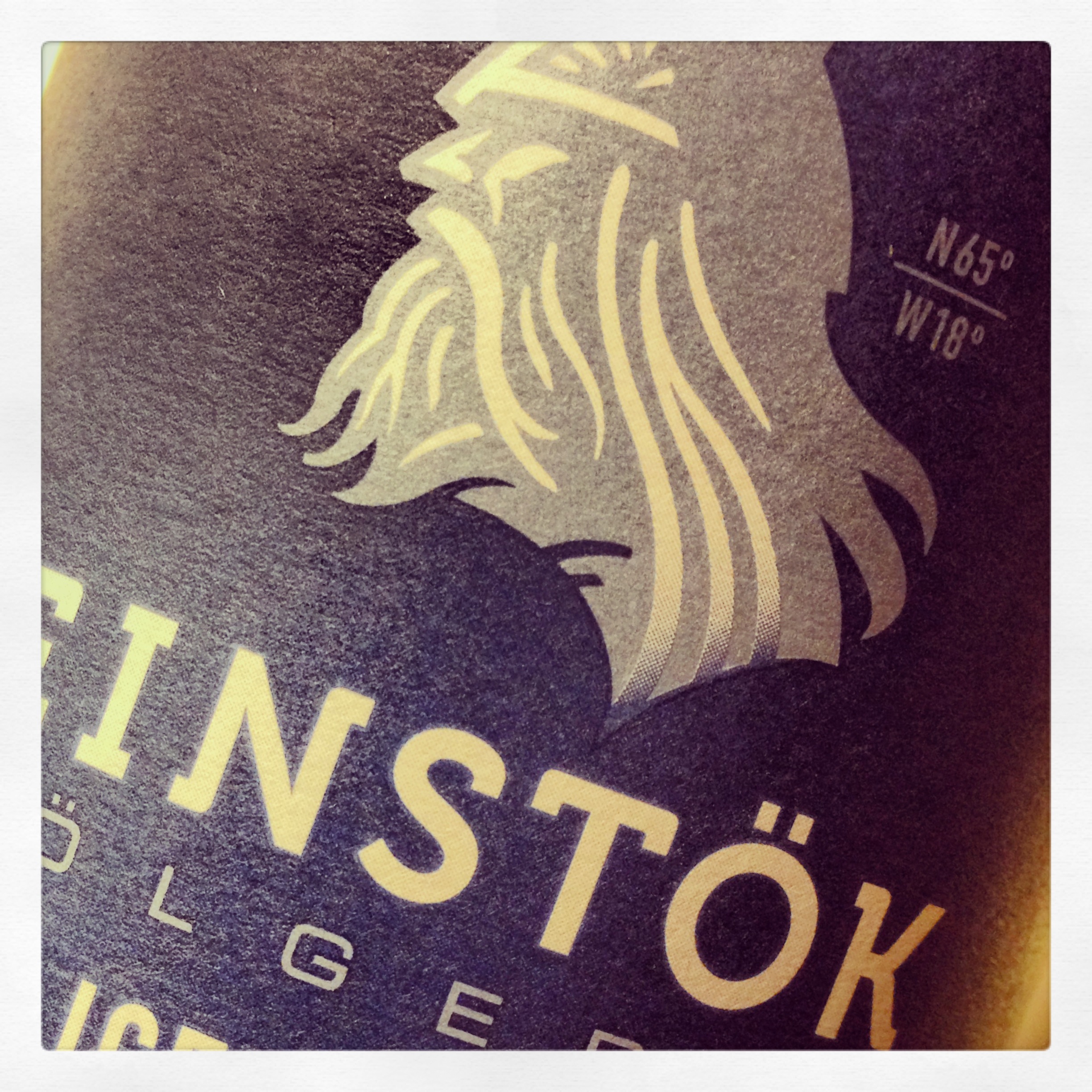
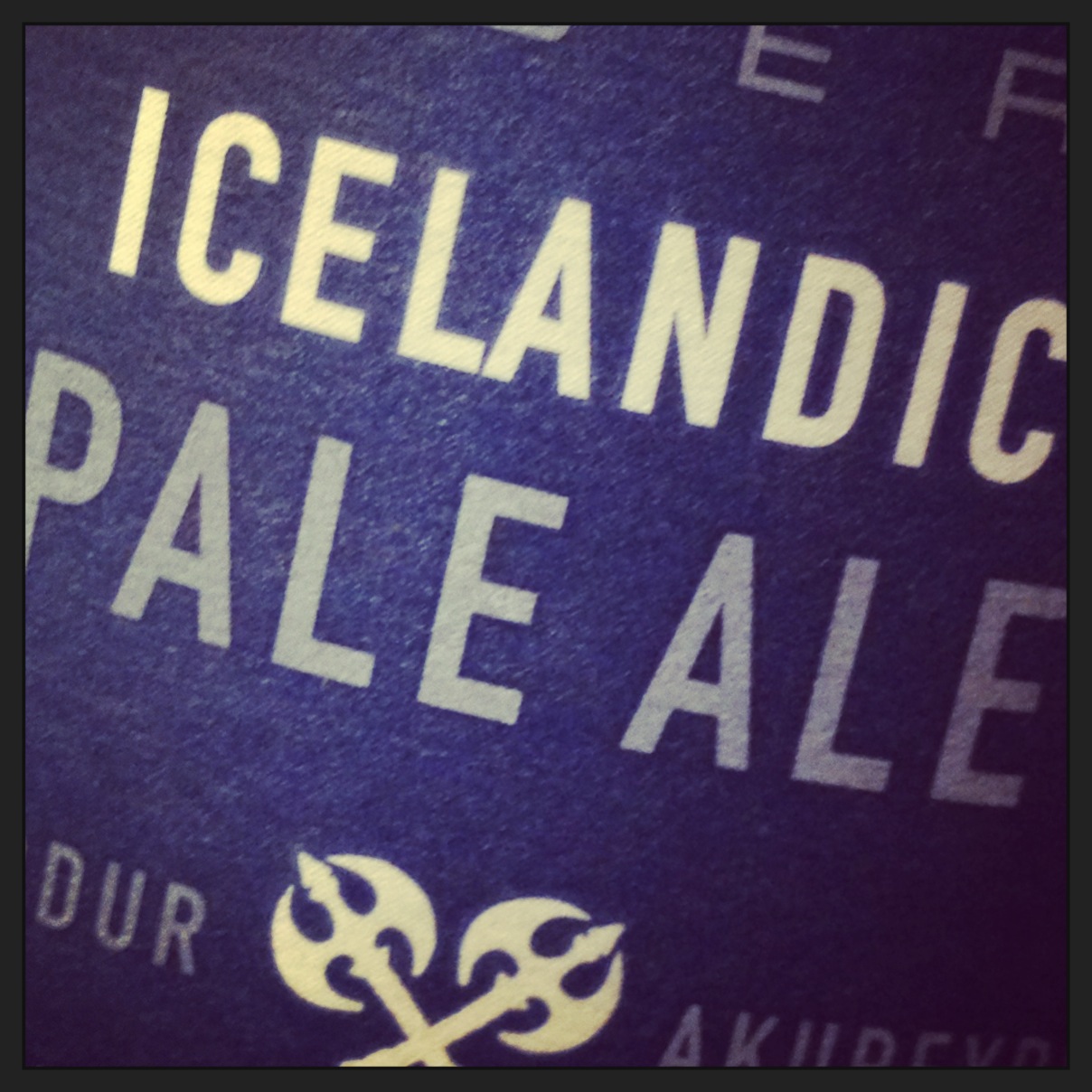
IMG_0652IMG_0658Today though I am drinking a beer from one of the nascent craft breweries. This one in fact is close to my affections as it’s from Akureyri, Iceland’s second largest settlement and situated just below the Arctic Circle. It was the place I flew into all those years ago before heading even further round the northern coast to the farm. It was here we did our shopping; buying delicacies such as caviar in metal tubes or vac-packed puffins. It was here too that our Jeep broke down and we ended up making an impromptu meal on a camping stove from air-dried cod, turnips and a can of tomatoes, just off the forecourt of the most incongruously placed Esso filling station imaginable, before eventually fixing the engine problem with a pair of old tights.  There was no brewery back then. Today there are a few, including Iceland’s largest, Villifel (Viking) and a smaller, craft ale brewer, Einstök Ölgerđ. It was beers from the latter that I found in the Harvey Nics pop up shop in The Trafford Centre of all places.

I bought a couple of bottles of the Pale Ale, a 5.6% affair, presented in a dark blue Scandinavian minimalist label-set, featuring some bearded bloke with a horned helmet and crossed axe detailing. All very dark ages chic.  It’s a good beer: very much in the style of an American pale ale, with a melted caramel colour and a grassy, lemony, wheaty aroma and a soft, gently carbonated body with a sharp hop tang. It’s a beer perfect for these high latitude dark nights and short days, when the sun hardly seems to rise above the horizon.

© Beer Tinted Spectacles, 2013
What Goes Around…

The Tinted Guest Blog: James Berry @ London Crawling

The Tinted Guest Blog offers members of the wider Tinted Circle a channel to share their views:  often controversial, typically sharply observed, always pro beer. This time, London beer enthusiast James Berry at London Crawling offers his perspective on what drives the emerging trends in the changing face of the London pub scene.   

It’s a strange thing fashion – it is inherently competitive: staying one step ahead of the rest, always having/doing/seeing the new thing, being at the forefront of the zeitgeist. Despite this we so often refer to the past to define the trends of today and no more so than in the ever changing appeal of that wonderful bastion of British life – the Pub.  Publicans looking to retain their appeal in an increasingly ‘noisy’ leisure market are looking to the past for inspiration, providing their customers with a haven away from the pressures of modern life – a space where they can connect with other people without the need for technology.

Looking back over the last ten years or so I can pinpoint two distinct shifts in style of Britain’s drinking establishments. Taking the early Noughties as my start point, the pub was largely irrelevant to young people, as appealing as saving up for things and eschewing University for a job.  This was the era of the VENUE BAR where the walls were white, the fittings chrome, and the beer bottled. In fact it was often not beer at all but a fruit flavoured alcoholic beverage called – somewhat irresponsibly in hindsight – an Alco-Pop. The music was repetitive and a trip to the toilet was not dissimilar to a tour round a NASA facility – modernity ruled and there was no time for tradition. The pub was where your Dad went for a quiet pint with his mates.

However, around 2007-ish there was a change. It was subtle to begin with but slowly pubs that had lay dormant for so long began a process of rejuvenation – original fixtures and fittings were uncovered, old pub names proudly re-claimed and displayed as badges of authenticity and what’s more they began to serve food. This was not your traditional British pub fare either; this was restaurant quality food, ordered at the bar and delivered to you on a wooden board while you relaxed on a re-claimed leather sofa. Lamb shanks with jus; Wood pigeon with Celeriac mash, Steak that was aged rather than old – all washed down with a Continental Lager or increasingly a Cask Ale or IPA.  Suddenly modernity was old hat as the tastemakers leading this pub (re)evolution looked to the past to create the future. As New Labour exited stage left (or should that be centre left), welcoming in an era of credit crunches and austerity it seemed people wanted something different from their leisure time. These pubs were more refined in their traditionalism – they required you to sit down and talk with your friends, to savour rather than consume with modernity reserved to the Wifi access essential to stay connected to social media or tune in to goings on at work while you had lunch. Even the music was different; DJs were perched on the end of the bar or on a table around the corner from the dining room playing Johnny Cash, 60’s Soul or anything else that suggested refinement, taste and authenticity.

The problem with fashion is that eventually the new trend becomes the norm and it is no different with pubs. No sooner had these independent gastro pubs staked their claim for society’s disposable income than they were either being diluted by copyists or bought up by the large pub chains. All of this begged the question as to where the aspiring publican, looking to do something different, goes to next for inspiration. Well you guessed it, back in time.

Walking along Mare Street in Hackney this summer, I came across a new pub opening. There was little about the façade of the place to suggest what lay inside. It was either going to be another gastro pub or possibly one of the ever diminishing number of traditional boozers unchanged from the mid-80’s (they often look similar but in reality have a very different appeal). To my surprise it was neither.  Instead it was what I would describe as a Modern Traditional pub.

The pub (which for the sake of this post will remain nameless) offers a carefully chosen smorgasbord board of real ales and traditional ciders, many from local London breweries, fiercely independent and working to traditional brewing methods. The food offering was limited to ‘English Tapas’ (scotch eggs, pork pies, etc), enough to take the edge off but nothing that could be described as a meal. However, the most striking thing was the complete lack of that familiar fabric of modern life – technology. There are no TVs, no WIFI and barely a social media update in sight despite a largely media-savvy mid-20’s to 30’s crowd. This was a place where people came to drink beer and talk to each other, just like they used to.

My visit got me thinking, if this is more than just a few individuals operating within a niche and the start of another trend, what is the appeal to those people who choose to spend time there?  Well for me it’s quite simple. Technology enables us to be connected to our friends and family more than ever before and our ability to step away from the demands of working life is increasingly limited.  We crave escapism and quality time with those people we choose to have in our lives and where better to get this than down the pub, a haven away from the world, just like it always has been. In an increasingly fast paced world, stopping to look backwards so often helps us to find the way forwards – cheers to that, I say!

© Beer Tinted Spectacles, 2013

Rite of Passage

Fear.  There’s nothing else to call it.  Just plain, untrammelled, fear. Some beer rites of passage were keenly anticipated – at University, ‘drinking the Blackie dry’ was a team effort in which everyone in the pub would pull together in an oftentimes successful effort to drink the Black Horse clean out of its stocks of beer.  Plus there were the ‘miles’ – the apochryphal pub lined streets with, oh, I dunno, 100 pubs in 100 metres or whatever.

Others though simply brought on cold sweats.  And they generally featured a beer of legendry strength.  And generally, they featured drinking physiologically challenging quantities of said beers. And perhaps getting a certificate at the end of the night, not that you’d remember receiving at the time.

The cold sweats returned this weekend when a friend bought me a bottle of one of the legendary beers as a child minding present. Not that appropriate a gift you might suppose, but word is out that I like beer a bit. There were three ‘legendary beers’ round our way: all ‘old’.  One was Old Tom, a beer from our local brewer Robinson’s, and a light, aperitif of a tipple at 8.5%ABV.  Every Robbo’s pub stocked it in bottle though, so it’s relative commonness made it more a beer for dedicated inebriation rather than any mythical beer challenge.  No, two beers held that status. The first was ‘Owd Roger’, a Marston’s barley wine which held a fearsome rep. I recall it being over 8% but time seems to have wearied it and today it stands at a still punchy 7.6% ABV.   other was the daddy though:

IMG_0556
Such a good beer perhaps it should really be called ‘Old Particular’


Old Peculier. Like Hannibal, to get to us in the flatlands of the north west, this beer had its own rite of passage – to clamber the foothills and cross the bitter and vast windswept nothingness of the north Pennines. And like India Pale Ale rounding the Cape, or Madeira crossing the Equator, some mysterious, alchemical transformation took place. Alcohol content was pepped up; taste was set to challenge; body was roughened up to prevent you from drinking it quickly. Old Peculier was like the Manchester United of the beer world: you felt defeated before you took the first sip.  Plus, it was draught not bottled, so you had volume to contend with too.

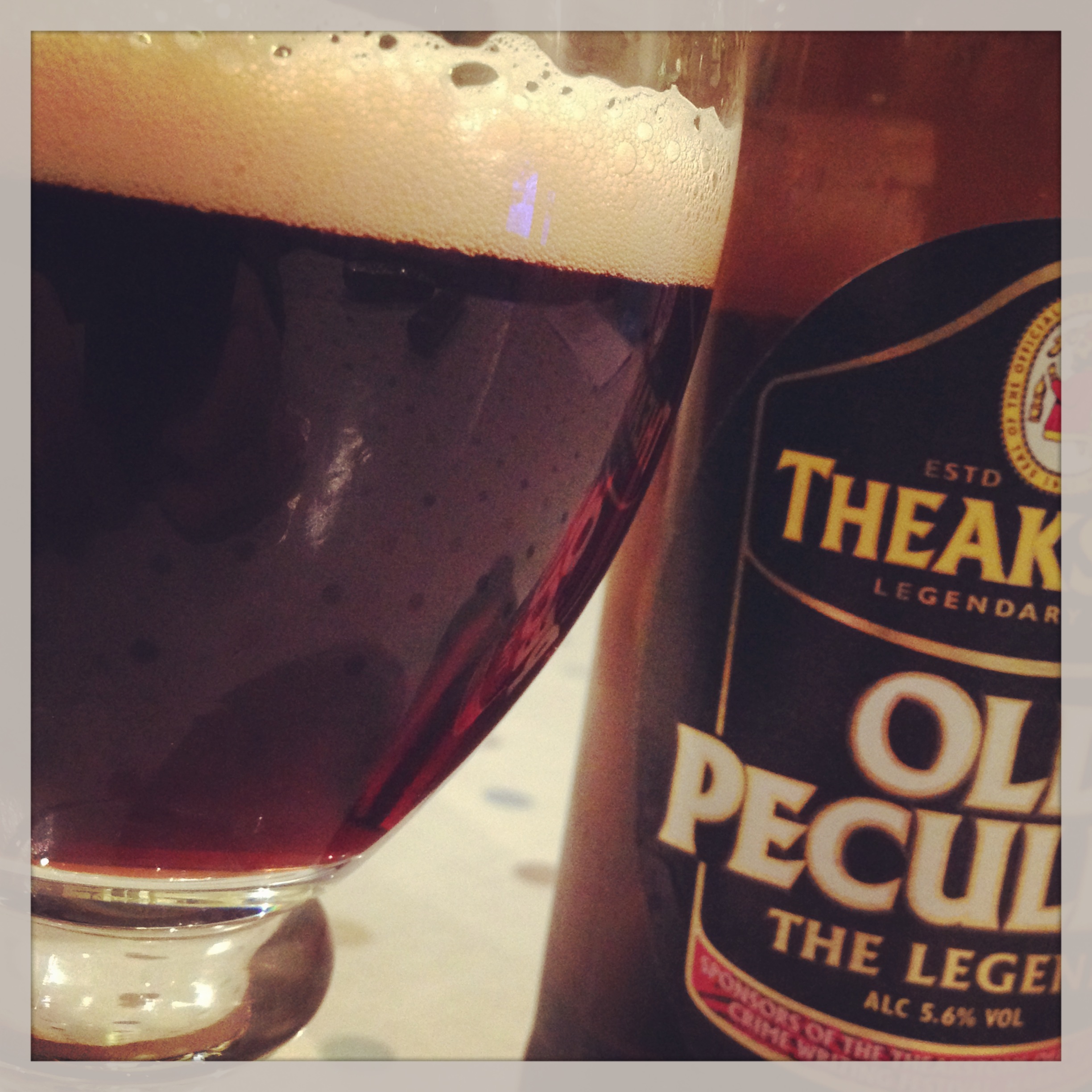
Here’s the thing though.  It’s not what I remembered at all.  First off, there’s the strength. I don’t know whether its alcohol level has changed, but in bottle it’s 5.6% – a typical strength for many of the beers I’m drinking these days. Second, I enjoyed it.  Back in the day, the assault of volume, reputation and a lost mental battle meant that I never really contemplated the beer, rather just strategies for survival. But today, with just the one to enjoy it was different: a tight liquorice-white head; an aroma of treacle toffee and distant smoke; a mellow alcohol in the taste off set by some dark cherry pulp.

In fact, the peculiar thing about this beer is that it is neither a challenge, nor Peculier.

©Beer Tinted Spectacles, 2013

Little Touches

The little touches around beer brands aren’t the first thing you notice. They come to bear over time. Too often, what gets talked about is just the dimensions of the beer itself – the aroma, the taste, the mouthfeel – or the brewing process; the brewer, the kit, the setup.  But I like the details.

IMG_0546Bottle embossing: more cost; more delight. Here the lovely twist of the River Thames around the base of a London Pride bottleMy past was a world of Big Beer. It’s a world of ‘cost optimisation’.  It’s a world where, for the most part, the joy of beer is slowly being sucked away. The details which make a difference over time cannot be justified against ‘return on investment’ criteria, nor often can you do the maths anyway. In the war of attrition the details get eaten away. In time, even the people employed to steward the brands over the long term have to give way to the arguements of cost in the here and now.  Have you noticed for example how lager bottles are getting lighter? Bud bottles used to be a deep brown. Hold an empty bottle now it’s no darker than a Ray Ban lens. The rationale: resource protection (Save the planet!). The real benefit: lower cost.  How bottle neck foil has disappeared over time? Not scratched off by the thumbnail of the drinker (who always prefer it) but scratched from the product cost by the accountant’s relentless push for cost reduction? And have you noticed how beer labels are thinner and smaller?  Or how cans, once you pour them crinkle like tin foil?

IMG_0550
Old Peculier: a design agency didn’t do this…


Other changes are less visible but more pernicious – like taking the ‘oxygen scavengers’ out of bottle crowns that protect the beer freshness but cost half a penny more; or making the card of your multipack thinner so it’s cheaper but as a shopper less stable to carry and more dangerous when taking it down off the shelf.

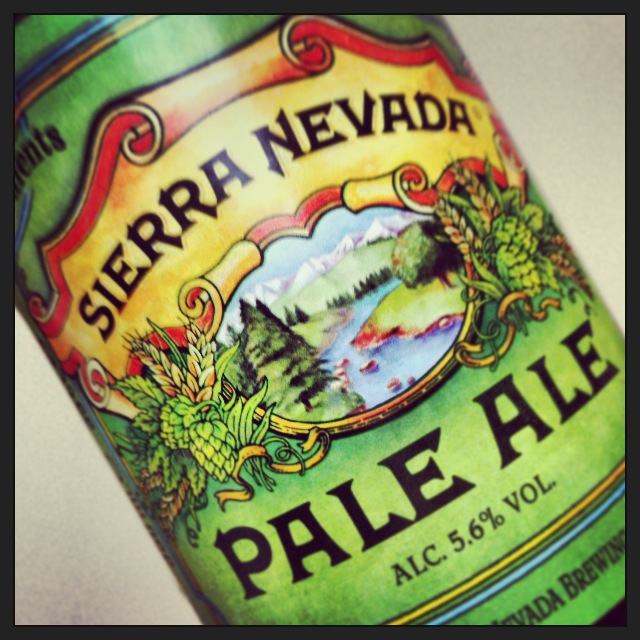
Thing is, there comes a point where the drinkers notice. Take Stella Artois: it is now available in a 284ml bottle – to allow them to hit attractive price points I assume.  But whoever heard of a Belgian lager in a British Imperial bottle size? And who cares that it’s 284ml – why not make it 275ml like the others and damn the torpedoes? All I care about is that it’s not 330ml like it used to be and poor value as a result.   Drinkers do notice beautiful labels like Sierra Nevada or Kernel. Drinkers do notice beautiful, embossed bottles like London Pride. Drinkers do notice quality materials like the labels and foils on the Thornbridge range.

IMG_0554The Sierra Nevada label – like a map you can read it differently every time, seeing some new detail.We should celebrate the details. We should cherish the beers from the brewers who recognise that drinking beer is more than just drinking beer, but an experience that pleases all the senses and recognise that sometimes, despite what our financial advisers might suggest, you can’t put a price on it.

© Beer Tinted Spectacles, 2013

The Session #79: U.S. vs Old World Beer Culture

The Session, a.k.a. ‘Beer Blogging Friday’, is an opportunity once a month for beer bloggers from around the world to get together and write from their own unique perspective on a single topic. Each month, a different beer blogger hosts the Session, chooses a topic and creates a round-up listing all of the participants, along with a short pithy critique of each entry. This month’s topic is hosted by Dingsbeerblog (http://www.dingsbeerblog.com)

The Session ImageIn the late 1980’s, three strands interwove at a crucial time for me which triggered my interest and enthusiasm for beer. The first was family – my older brother, in his first radical phase was an unwitting early proponent of slow food, and as he was building his knowledge of food, wine and to a lesser extent beer whilst at University his influence rubbed off on his younger brother when he came home.  The second was friends: Dave Wilkes and his home brew to be exact. I’m not sure where Dave’s passion for home brew emerged, but what I do know is that it was a consistently deep brown, nutty concoction, served straight from the cask (something I hadn’t seen at that point in my hitherto sheltered life) and weighing in at what I’m guessing to be about 15% ABV¹.  The third strand was the emergence in America of a beer tea party: new, interesting brews, attempting to throw overboard the homogeneity of typical US offerings.  To a late teen in provincial UK, this was not learnt first hand.  Rather, the source was Michael Jackson of course, both through a much thumbed copy of ‘The New World Guide to Beer’ and also through the particular episode of ‘The Beer Hunter’² where Michael travels to west coast USA and vividly brings to life this new narrative of US craft beer. As he takes the trip to the tip of northern California to celebrate the barley harvest with all the Anchor Steam workers, my beer idyll is born.

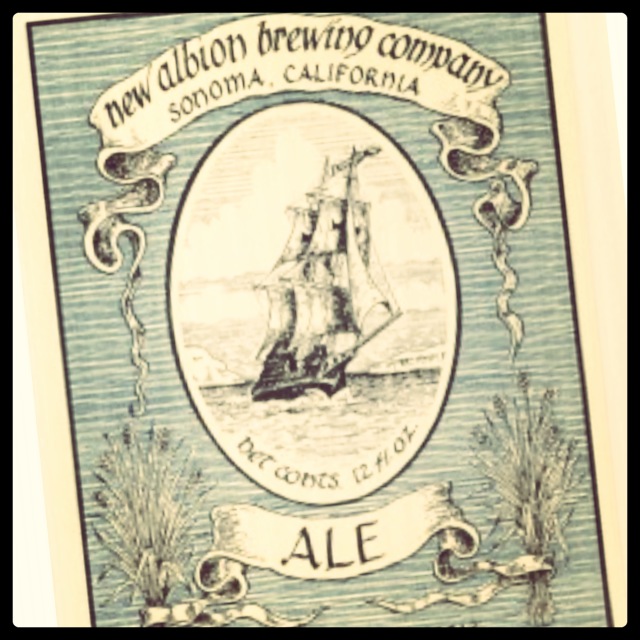
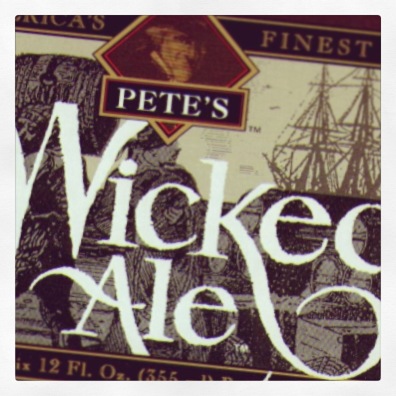
IMG_0444Over 20 years on, as I read Tim Acitelli’s excellent ‘The Audacity of Hops’ – an almost 50 year history of American craft beer, I realise how much each ‘culture’ is indebted to the other.  If you can call it that of course:  I’m not sure anyone in the ‘Old World’ would see much a shared tradition between say English beer culture and Bavarian beer culture – an important point when you see how the different European nations individually influenced the US scene.  The first wave was largely inspired by English pale ale:  could the early craft brewers like Jack McAuliffe create domestically brewed pale ale as flavoursome, as full on those he had drunk on his British travels? The name above the door giving away his influences: New Albion. Could Pete Slosberg devise a recipe as enticing as the brown ales he had drunk on his travels in Europe (I didn’t realise that the resultant, massively successful beer, ‘Pete’s Wicked Ale’ is no longer available)? Then later, wider European influence took hold, kick-started by Jim Koch reliably recreating his grandfather’s recipe for a Bavarian lagered beer in the form of Sam Adams Boston Lager but quickly and rapidly spreading into replicating, and attempting to better, beers from Belgium, Germany, France and beyond.

IMG_0442I’m conscious of my own biases around beer and particularly my orientation toward well brewed and properly lagered Czech and Bavarian lagers and feisty and flavoursome US pale ales and IPAs in particular; but actually portraying a picture of the ‘Old World’ and ‘New World’ as a battle: us versus them isn’t overly helpful.  The reality, as is so often the case, is defined more by the similarities than the differences.  Riddled through both cultures are defining traits: a trigger event – a burning platform that great, idiosyncratic, varied beer was close to dying out. In the US’s case, Fritz Maytag heard about the brewery days before it was due to close down. In the UK, the dawning realisation that cask beer (and the infrastructure that supports it) was facing the same fate. Struggle – it’s easy to forget the perseverance, grit, setbacks and failures along the way. Many of the original wave of US craft brewers simply didn’t make it through the first wave of growth, starved of cash, resources, time or capital, they had to either close or stay niche. Most went under. It’s why I fear the same for many of the UK’s current crop of micro brewers. Time – it’s almost 50 years now since Fritz Maytag bought Anchor. It’s over ten years now since Gordon Brown introduced the progressive beer duty, the so called ‘Small Brewers Duty Relief’ and yet, you could argue that for most drinkers here, cask beer still hasn’t entered the mainstream.  But more than anything else, what’s clear is how the Old and New World cultures are self perpetuating, each fuelling the other – the growth of craft brewing in Italy, inspired by the US, being a great example. I saw this for myself on a recent business trip to Milan, managing to fit in a short beer break after work one evening, and finding a craft beer bar that you wouldn’t expect to see this side of the pond – the most ‘mainstream’ beer available was Menabrea which enjoys, what? 2% of the Italian beer market?  Or the spread of US hop varieties to the point where a number of UK beer aficionados are actively complaining about their over-use versus traditional British hop varieties.  And finally, there’s the experimentation. The emerging narrative is that it’s a case of poacher turned gamekeeper, and the European brewers are only experimenting because of the boundary pushing of the US brewers.  True to a degree of course – but not solely so.  There’s been an experimental tradition in surprising and not-so-surprising European countries for many years – Belgium of course, but also in countries like Scotland, where brewing with traditional ingredients, or barrel aging is not a new phenomenon.

No, this is all a case of ‘and’. The real vibrancy between the craft brewers is the mutual support, the ready sharing of ideas and experience, the healthy competition that exists.  It’s a culture that’s worth celebrating and enjoying across the whole world.


¹The fashion in beer books is to tell how home brew ‘transformed my expectations of how amazing beer could be’.  With respect to Dave, this wasn’t the case, I think his home brew was a malt extract kit brew and it was pretty hard going. I seem to remember swirling my mouth out with a Heineken.

² Two links: http://www.youtube.com/watch?v=CtmxXgKU1o0, the beer idyll is at the start of part 2, http://www.youtube.com/watch?v=36BUK7lv-iU

©Beer Tinted Spectacles, 2013