The Session #87: Local Beer History

the session beer blogging fridayThe Session, a.k.a. Beer Blogging Friday, is an opportunity once a month for beer bloggers from around the world to get together and write from their own unique perspective on a single topic. Each month, a different beer blogger hosts The Session, chooses a topic and creates a round-up listing of all the participants, along with a short pithy critique of each entry (see link, posted to comments in due course). This month’s Session is by Reuben Gray at The Tale Of Ale (http://www.taleofale.com) on the topic of Local Brewery History – Reuben wants us to give a history of a local brewery – one that’s more than 20 years old. It may be alive; it may be dead or it may be the living dead…

 “To me, beer is much more a liquid in a glass. It’s about people, places and increasingly, terroir”  Ben Keene, ‘The Great Northeast Brewery Tour’

I am a beer writer who has lived and worked in one of the world’s great brewing capitals for over 20 years. I am also a historian or, as a friend put it, a ‘socio-geographer’ looking for the connections between people and place. To me, just as for Ben Keene who wrote in the preface to his brewery guide to the Northeast of the U.S., beer is much more than a liquid in a glass. It is much more than a way of easy inebriation. It is a connection – particularly, that is, if it is a local beer, brewed with locally sourced ingredients, by people who know people you know. This month’s Session weaves these strands: of place; of people; of time.

This piece is also something of a personal crossing of the rubicon. I will write about a subject I have carefully avoided to date.  I will write about a brewery where I still have connections, having worked there for almost 20 years – and therefore risk upsetting people I know. It is not however a wistful or nostalgic piece about great times gone by (certainly, it is not intended to be) – but it is a tail of a tragedy. A tragedy hardly befitting not just any old brand, but arguably one of the greatest ever brands. Not just beer brands. All brands.

This is the story of Bass.   This is the story of the first and once, most recognisable, trademark in the world. This is the story of its shockingly recent, quick and preventable decline.

The history. Unlike other writers in this month’s session, there’s not a lot I can add to what has been written about the story of Burton and Bass – painstakingly researched and recorded by Roger Protz in his terrific ‘The Story of Brewing in Burton on Trent’ (The History Press, 2011). In a nutshell, the history of Bass is interwoven with the history of British Empire and industrialisation.  William Bass was a local brewer, but successive generations expanded the brewery riding on the coat tails of the rise of the empire in India and coinciding with leaps forward in brewing science and chemical understanding.  Just as the first pale lagers were catalysed by the industrial manufacture of crystal and clear glassware, so Burton ales stole a competitive march on other British brewers through the understanding of malting (new paler & crystals malts that both gave up their fermentable sugars more easily & delivered a paler colour), of new fermentation techniques (in particular, the Burton Union system which allowed for both clarity in presentation and whilst leaving sufficient yeast in cask to allow for secondary fermentation) and embracing steam power which allowed them to brew consistently on a mass scale for the first time and also deliver more quickly to wherever their markets were established.  Go to St Pancras station in London today: as you sip your Cappuccino in Benugos, or buy a Thomas Pink shirt, enjoy the magnificent cellars. They are beer cellars, with columns one Beer-Butt wide. They are in fact, Bass cellars.  And when the Indian trade declined, brewers such as Allsopp and Bass revolutionised domestic beer, using their international brand reputations to effectively exploit the trend for paler, lighter beer styles (pale ale and bitter in particular), coming up with new classics in their own right.

IMG_1396

Bass, of course, was only one of many Burton brewers. At the start of the twentieth century, there were 29 brewers in Burton on Trent. The architectural and logistical legacy still exists today – with some stately architecture and even, roads – Guild Street for example, one of the main routes connecting central Burton to Derby and the north, was built by Bass, and is leased by their successors to the local council today (plus it’s home to The Manzil curry house & The National Brewery Centre – a double whammy).  Elsewhere the former Everards Oast House still looks down goatily on the town, waiting for someone to raise the funds to restore it and appear on Grand Designs.

But Bass survived them all.  Commentators tend to agree that it did so because it diversified into lager earlier; it acquired public houses faster and was incrementally better-run that its competitors.  And it made good decisions along the way.  One in particular was fundamental – history will record Bass as owning the world’s first registered trademark – the red triangle – registered in 1876. Along with Allsopp, Bass moved quickly on the decline of the Baltic trade to establish trade with India and elsewhere in the British empire.  And where the liquid went so went the red triangle – growing the reputation of the company and brand.  The red triangle sold not only within the empire but across continental Europe and across North America. The red triangle got painted by impressionists.

Recent times. The troubles for Bass as a British brewers began with The Beer Orders.  The Orders demonstrated that the British Government was more than rationally interested in the structure of the British brewing and pub retailing industry – it believed that the price of a pint was a vote winner / loser and was desperate to retain a high level of competition in the UK.  Every brewery merger would be investigated – for Bass, when the first major attempt failed (a UK joint venture with Allied – now Carlsberg), the writing was on the wall.  Why would the Bass plc management stay in what they perceived as a low growth, low margin business with active government interest, when they could invest in higher growth, higher value businesses, like hotels?  History was cast aside. The brewing business was put up for sale and ultimately sold unconditionally to Interbrew of Belgium. Many executives ordered a new Aston Martin that day (I met one of the merchant bankers representing Bass plc and they could not believe that they received an unconditional offer). Yet, the government intervened again and ordered the new business to be split – in the end between Interbrew and Coors of the U.S.

And here were the seeds of demise of Bass, the brand.  Interbrew kept the name & red triangle trademark; but the breweries and brewing assets in Burton went to Coors. With Interbrew breweries throughout the UK and in Europe it was inevitable that Bass would have to cut ties with its home.  Perhaps a deal could have been struck between Coors and Interbrew to prevent this: but why would Coors help Interbrew protect one of the inherent strengths of a now-competitor brand? And why would Interbrew pay a premium to do so?

Bass & me. It was hard as someone who cares about these things to witness the company and the brand unfold as it did. From being someone who had worked on and sold the Bass brand to see it go was tough.  But my history stems from before I joined Bass. Indeed, I fought hard to join Bass Brewers because of draught Bass.  Me and my University mate Duncan, enjoyed a pint or three in ‘Ye Olde Shippe’ just off Exeter’s Cathedral Close, or in the Great Western near the station or best of all, at The Bridge in Topsham. Oh, there were good beers available from smaller brewers, but draught Bass was the daddy. Story goes that Bass was strong near the railway stations – being on a direct line from Burton the beer was always as fresh as it could be even with the distance covered.  It was a lovely quaffable ABV, 4.4%, with a bit of everything: a snappy, struck match, sulphurey aroma, an off-white creamy head and that lovely nutty flavour from the two strain Bass yeast. My brother always summarised it well: whereas Pedigree and Bass were both great beers, Pedigree is that bit agricultural – a bit farmyardy. Bass though, whilst also enjoying the Burton character, had better balance, a touch of sophistication.  If a beer could be this good, it must be a good company, I thought.
IMG_1570IMG_1573

IMG_1572

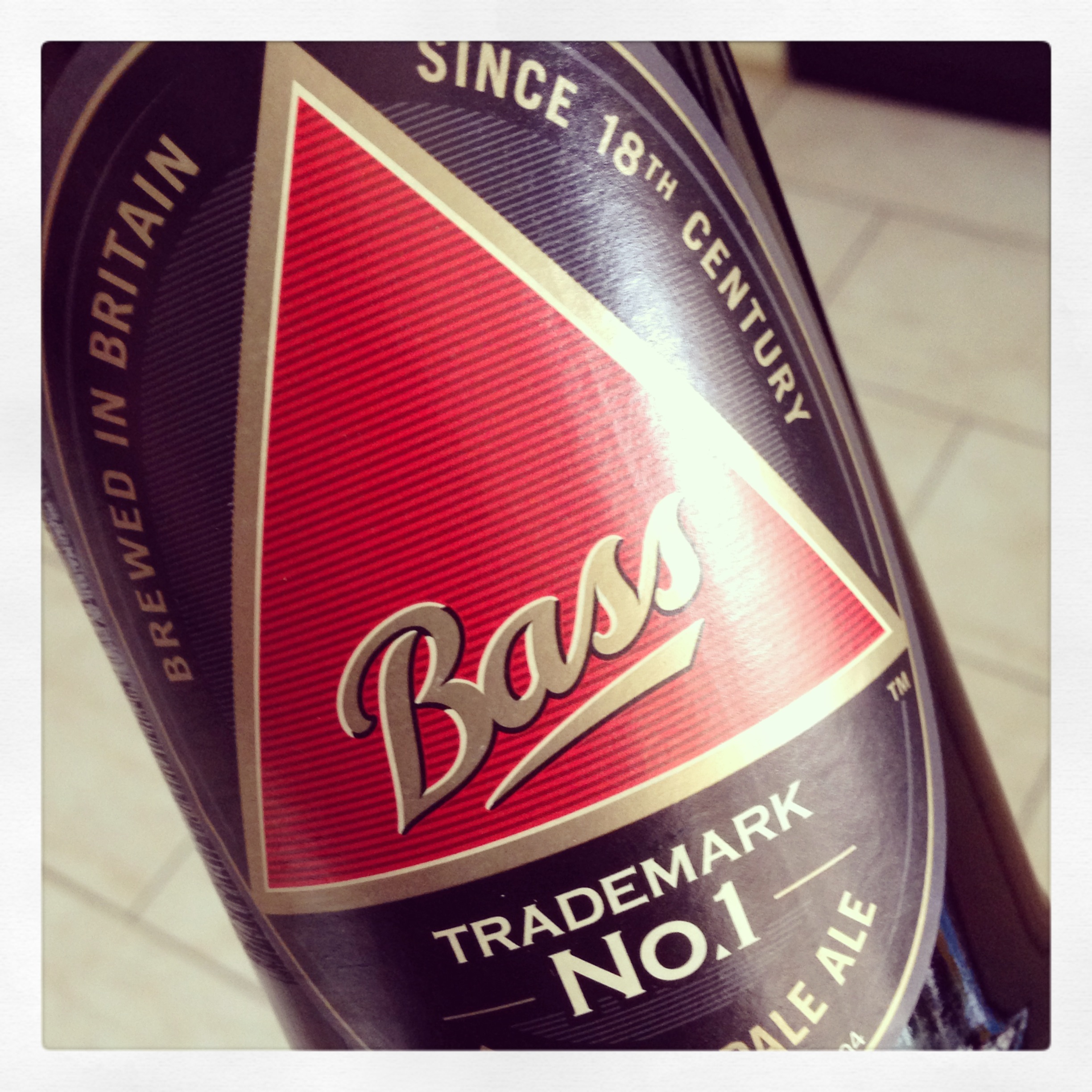
**Fiddling: One bottle, three triangles.  Today, Bass can’t seem to make its mind up on even how to represent the red triangle – or indeed Bass’ signature – on its bottle.

Long term, there have been two big losers. The first were the people of Burton who had to endure seeing the Bass name, of which so many were proud, disappear (topping off a list of all the other great Burton beers – in particular, Draught Burton Ale (Pedigree is the exception, thankfully)).  Down came the red triangle. Off the brewery. Off the maltings. Off the trucks. Off the sheds. Even off the (Bass) Museum (it’s like Prince: ‘The Museum formally known as Bass’). Even off the wretched little brown signs that point to Burton’s brewing heritage*.  Second and tragically was the beer. Draught Bass and Bass Pale Ale have, to mis-coin a wartime expression, ‘Gone for a Burton’.  Sure, draught Bass is still brewed (ironically, by its long time competitor, Marstons). And cans and bottles are brewed by ABInbev up in Salmesbury. Bass Pale Ale for the U.S. is now brewed overseas (Belgium I believe, so it can still claim ‘imported’). But, unlike other Burton breweries – Thomas Salt, James Eadie, Allsopps, the list is long – which are properly dead, Bass has to endure a living dead status. Shorn of its home ties, brewed where convenient, unloved by its new parents (it has apparently been up for sale by ABInbev since 2010) it now stumbles along, all the while withering on the vine.  Commercially I understand that ABI has to prioritise, yet in the U.S., not so long ago Bass was the largest imported ale (800k U.S barrels a year); today it is less than a quarter of that – and on their watch. From being the U.K’s largest cask ale at the turn of this century (180k UK barrels) today, it gets lost in the rounding, with a parent who makes some noise about the brand but isn’t really doing anything other than fiddling** (Molson Coors, ironically, have now acquired Cornwall’s Doom Bar which is the UK’s largest cask brand – done, it must be said, for balance, on their watch).  Today seeing draught Bass in Burton is a rare sighting indeed – in fact, not so long ago, the new owners insulted Burton drinkers by insisting it came out of many pubs to be replaced with a keg version. Piss on my chips why don’t you?

Yet, it’s not nostalgia or wistfulness that makes me angry. What hacks me off is that today, premium UK brands are so exportable. Look at our car industry – a laughing stock 10 years ago, today Land Rover can’t keep up with demand – Jaguars, seemingly, are becoming as common as BMW 3 series. Or clothes brands – not just luxury brands, but ‘British look’ brands like FatFace or Boden are successfully building their businesses abroad. And over the last twenty years, ale’s time has not only come again at home, but in so many markets worldwide too.  This should be a new frontier for Bass. Indeed the beer is still great – a tad sweeter in the palate perhaps, but still the delightful aroma; still the restraint, the balance. But no new frontier. Rather, it languishes in a long tail; slighted and suffering due to the greed of Executives and the bodged intervention of government Civil Servants.

The tradition and memory of Burton, Pale Ale drinkers, brewing history and Bass deserves better.

© Beer Tinted Spectacles, 2014

*One still persists, A38 northbound, just south of Branston.
Citra

Here was a clear case of hidden in plain sight. Indeed, on reflection, the signs couldn’t have been clearer. I remember hearing of exciting new hops from a colleague who was really excited about the potential of new varieties for new beers in our innovation programme.  What if we brewed a single hop beer with Nelson Sauvin? Or with Citra?  Or maybe a combination of the two – dry hopping with Citra perhaps?  It was 2009, yet despite of people wearing their metaphorical day-glo suits near me and waving semaphore flags right in front of my face I didn’t pick up on them.  There were other priorities; other pressing matters; the business wasn’t ready for this sort of innovation.

Nature has a tendency to be persistent though and like a weed pushing through cracked mortar in order to reach light and life so these new hops have steadily, surely, forced themselves into my consciousness. And my own re-emergence into the world of artisan beers has made it easier for them to finally hit home.

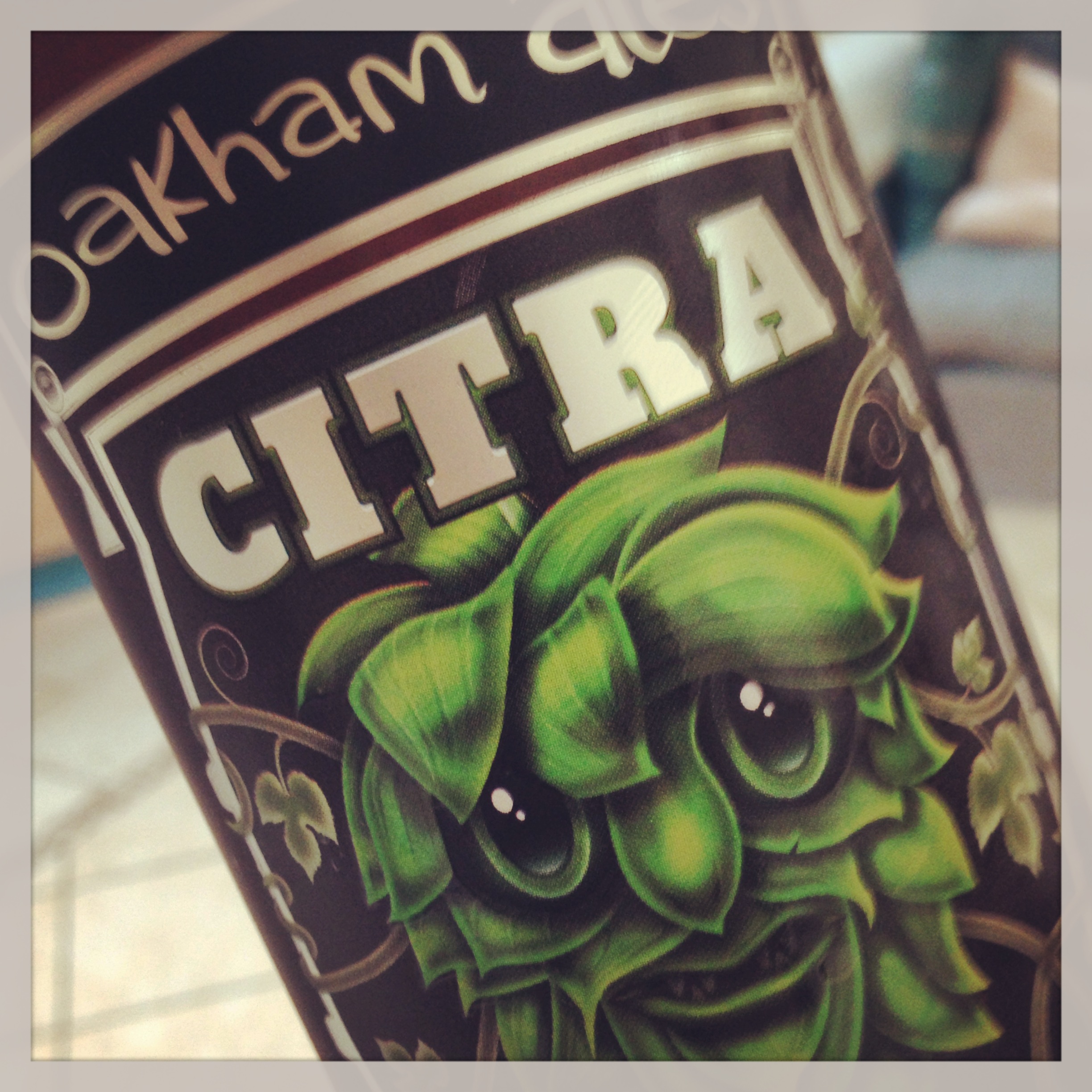
I’d heard about Oakham Ales through a roundabout source; a cider maker looking for some business advice used them as benchmark for what he regarded as a quality operation.  It was their beer ‘Citra’ apparently; that was the tipping point; the point of inflection, the thing that pushed them over the edge towards greatness.  My friend Steve mentioned it too: it was a grand beer, which had been surprisingly and pleasingly encountered on the shelves of B&M whilst out on the hunt for stationery and discount fat balls.

Later, I found it, lurking, furtively on the top shelf of a Waitrose. A classic case of impulse purchasing this: I went out of my way to that particular store to get a new brand of fruit tea I had helped develop (Price: £2.89) and left 45 minutes on, fully signed up with a ‘My Waitrose’ card, and an aesthetically pleasing basket of expensive comestibles (Total bill: £24.14).  This beer had better be bloody good, I told myself.

IMG_1418And my; it certainly is. For a little brewery from the smallest of counties, this is a mighty beer. It’s a single hop pale ale and pale it truly is; Pilsner-like I’d say. But it’s the aroma that hits you first – lever off the crown and there it is. The beer might be a straw-lemon colour but the smell is grapefruit and gooseberry and it fair races out to greet you.  It pours with a lithe, white head that billows to formation and leaves subtle tracery down the glass. And all this sensory overload continues; a swirl of the glass reawakens the aroma; there’s an assertive but balanced bitterness all the way through from foretaste to aftertaste and all the while that pronounced fruitiness: a dryness in the beer that suggests to me brushing against a gooseberry bush when you are picking them; there’s the fruit and that green-leaf character which is so moreish, so appetising.

For once, the hype was right; here is a characterful beer, one that refreshes and rewards, that balances hop intensity with easy drinkability. I won’t miss those signs next time.

© Beer Tinted Spectacles, 2014

A rye smile

“Certain things, they should stay the way they are. You ought to be able to stick them in one of those big glass cases and just leave them alone.”  ― J.D. Salinger, The Catcher in the Rye

As my bank of memories grows, so I find myself experiencing moments of involuntary recall. Tiny cues can stir up vivid recollection, just like Marcel Proust and his tea soaked madeleine cake, prompting memories of his aunt’s home during his childhood. Sometimes these are powerful personal memories, connecting me to a time and place – the caw of a crow, an oily chain, or an early evening afterglow behind a stand of trees. More typically they are far more prosaic – and one, bizarrely, concerns rye.

Specifically, it concerns rye bread: not the crusty, spicy loaves you get at a good bakers nowadays, but the German squares; tight plastic packed in brick like solidity. I first really tried them at a friend’s in Stuttgart – her family had pumpernickel every morning as part of the breakfast routine, sliced thinly like crushed soldiers, but topped with hams, cheese or pickles rather than dipped in egg. I liked the routine. I liked the rye bread. Still do, but it doesn’t form part of my rituals except on holiday when I tend to buy it as the most interesting bread on offer.  But the rye bread doesn’t take me back to Stuttgart; it takes me back to somewhere further east, the town of Regensburg on the Bavarian Danube.  It’s a beautiful UNESCO protected town, mercifully spared from Allied Bombing for the most part. There, a few years back, I stayed for a couple of nights, toured a few breweries and ate local delicacies: Regensburger Würstl, fine but chunky pork sausages, halved lengthways, cooked over charcoal and served with onions and tangy mustard. Dampfnudeln too, soft bread rolls that made a lovely, moist sausage butty and reminded me of Manchester barm cakes but done Bayern style. And all washed down with roggen – rye beer.

I don’t think roggen is a Regensburg thing necessarily – certainly rye is used widely in other beer brewing countries: in fact I remember being on a bit of a wheat beer phase at the time, searching for both hefe- and Dunkelweisses; but the roggen was new to me; in fact it was my first experience of a rye beer at all. So it happened to pass that the roggen, the würstl and the dampfnudeln make up my rye ‘madeleine moment’; a beer garden parallel to the the Danube overgrown by vines and starlight clematis; a warm evening with the smell of charcoal & pork skin, Herr Ober, good food and glisteningly dark glasses of roggen beer.

Two recent prompts caused that Danube beer garden to return. One was seeing – and trying – a bottle of the very beer we drank that evening, Thurn und Taxis Roggen. The other was a beer from much closer to home, Marston’s ‘Revisionist’ Rye Pale Ale.  Thurn und Taxis was one of the Bavarian Royal breweries, although since I was there, it has ceased its own brewing and contracts out to Paulaner, who in turn, are part of the Heineken / Brau Union combo. Sad that, as the brewery was in a palace and was incredibly picturesque. And sad too that the beer was a shadow of my shadowy memory of it: that memory is of a spicy, bananary, clovey beer (but not a wheat beer) with a thick off-white head and a ruddy luminescence. Today’s version is thinner; less pronounced in every sense, less bold, more…. ordinary; more… brown. I didn’t finish it, for my memory’s sake.

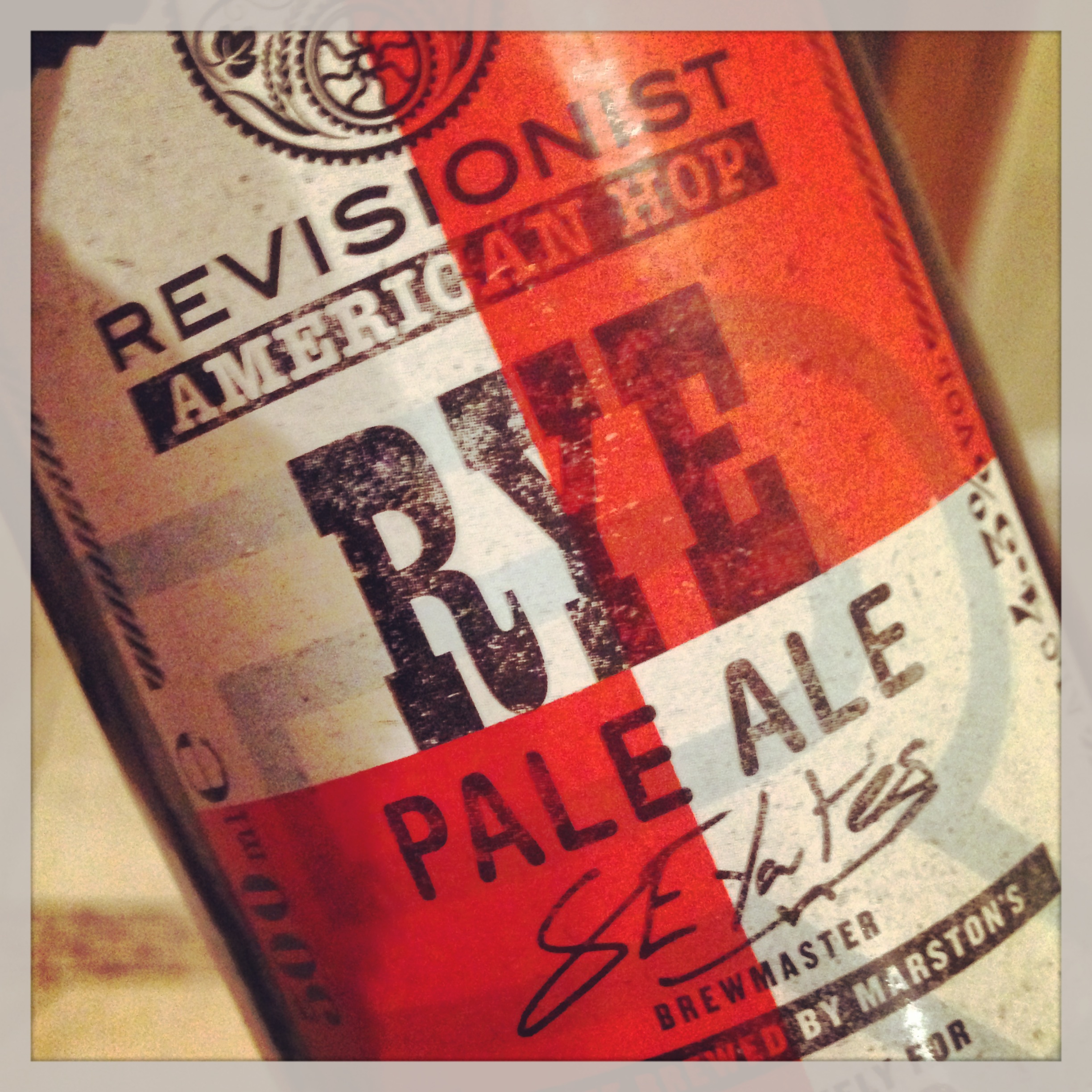
IMG_1399The Revisionist Rye is a different kettle of fish. For a start it’s a top fermenting pale ale; 4.3%, and Marston’s are promoting the hop as much as the rye, including dry hopping with Amarillo and Citra.  Yet, in truth, it was something of a disappointment: don’t get me a wrong, it’s a good beer, I enjoyed it. But really, the only touches of rye could be seen in its colour, a slightly more reddy-brown than a pale ale and a faint spiciness (allspice?) – but faint is the word. As you’d expect, the hops shone through, particularly the citra lending the beer a grapefruity edge with a pleasingly mouth-puckering finish. The beer is dry hopped – you could tell from the moment the crown was cracked.  But no aroma of rye; no wry smile.

Perhaps my Regensburg beer memory is best left in a glass case after all.

© Beer Tinted Spectacles, 2014

Time for a Sharp Entrance

Right at the heart of the debate about what constitutes ‘craft beer’ is a case like Sharp’s brewery.  Founded in 1994 on the economic backwater of the north coast of Cornwall, by 2008 it was winning awards for ‘Fast Growth Business of the Year’ and three years later was acquired for £20m.  This was a classic case of a brewery working towards a specific exit strategy: in this case the plan being acquisition by another entity.  The other entity in this case was Molson Coors, a top 10 global brewer.  Questions get raised: do Sharp’s, now that they are part of a multi-national’s brand stable stop being craft beer simply because they have been acquired?  Or were they a craft beer in the first place, given that it was widely known what their exit plan was?

Frankly such questions can be a bit tiring, illogical and I’m tempted to duck the question.  The reality is though that perhaps, just perhaps, Sharp’s is evidence that some organisational learning has taken place in this particular multi-national.  Although some commentators are a little sniffy that Doom Bar is now the country’s (World’s!) biggest cask ale, the truth is that it was on that trajectory before the acquisition – that’s what made it attractive after all.  The facts are that more Doom Bar is sold in London than London Pride – yet the beer hasn’t changed. It’s still brewed in Rock; in fact it seems the biggest challenge has been how to increase capacity.  This was the pledge that Molson Coors made at the time and three years on, they have stayed true to it.

And Sharp’s continue to brew interesting beers – I was lucky enough to get hold of three of them; one I was keen to try given that last year it was awarded ‘World’s Best Lager’ at the World Brewing Awards. The other two were from the Connoisseur’s Choice series. All bottle conditioned; all brewed with interesting ingredients using interesting processes.  Is this not craft brewing then?

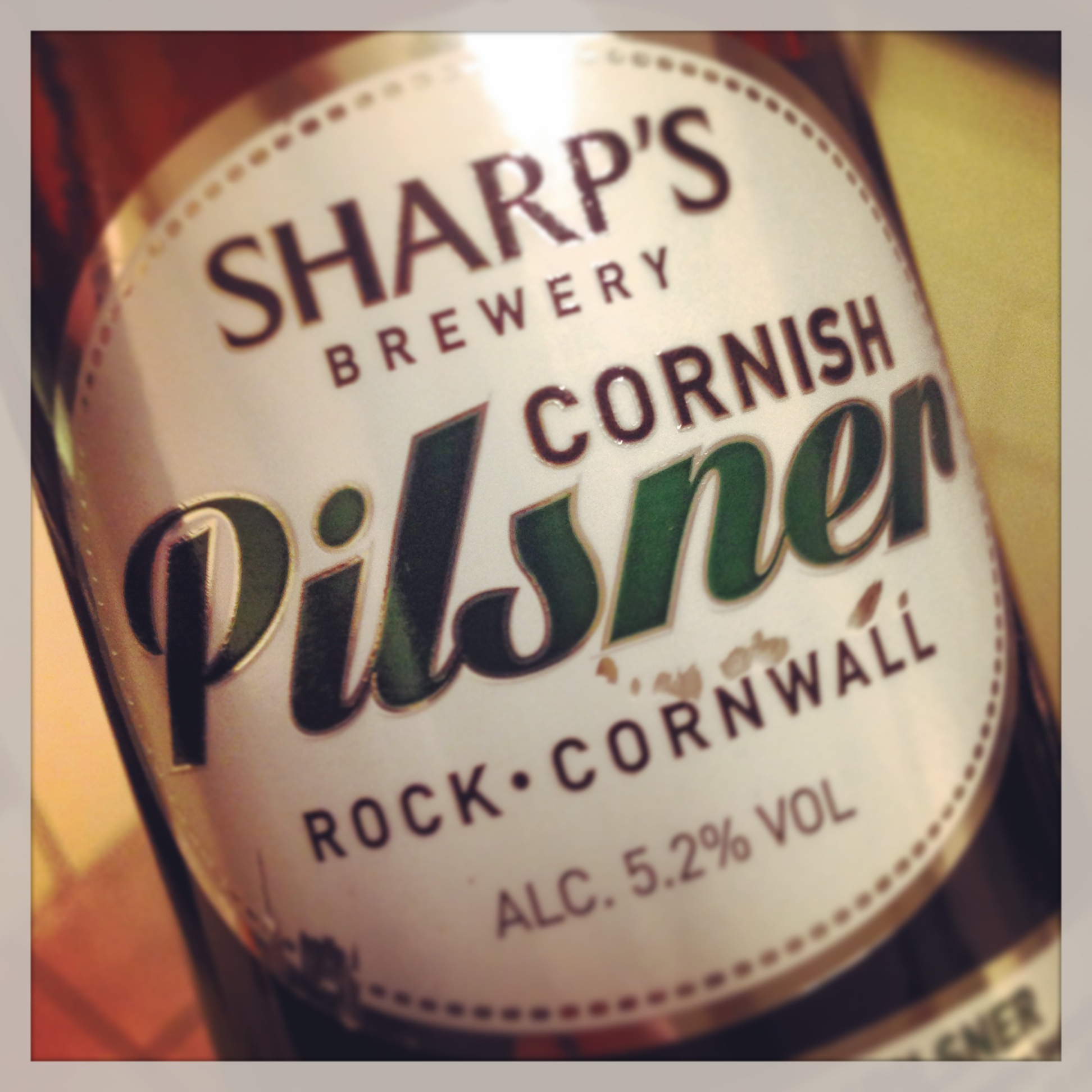
IMG_1099The first, the award winner, is Cornish Pilsner, a 5.2% beer, lagered on Saaz / Zatec hops. It’s also, unusually for a lagered beer, bottled conditioned. What I find surprising is it’s description as a pilsner: unlike classic Czech pilsners it is very blond in colour and couldn’t sustain a head for any length of time; equally unlike a Czech pilsner it has an incredibly agitated, mobile bead of carbonation arising from the beer, a function of the refermentation.  And herein lies the issue with expectation management – this is apparently the World’s best lager, yet against that accolade it fell down.  It is still a great beer though: much more like a Bavarian Helles, its taste was clean, with a strong malt structure, biscuity with a herbal background and a pronounced yeasty character.  I was left unsure about the benefits of bottle conditioning for the beer (especially as I couldn’t really see any yeast) but in no doubt that it’s a fine beer that I’m sure will be a success (that is if they can afford the vessels and space for their lagering tanks given the capacity issues).

IMG_1098Sharp’s Connoisseur’s Choice no. 9; another product of Sharp’s slightly deranged tinkering, in a good way. No.9 is a blend of beers; a ‘6 Vintage Blend’ in fact and at 7.4% a bit cheeky.  Displayed here then are the brewers’ affections for Belgian brewing heritage, getting back to techniques which were once everyday over here.  This blend has a beautiful colour, somewhere in the spectrum between an old tudor sideboard and a glass of aged burgundy: there’s a definite red hue shining through. And the aroma: without me getting all Jilly Goulden about things, there was a clear smell of beeswax furniture polish – yet the taste was much more what you’d expect; rich, mulled fruits, a slight Christmas cakeness which is warming in the foretaste and had a brief linger in the aftertaste of Aunty Hilda’s sherry. Again, in a good way.  A great beer: and definitely for Connoisseurs.

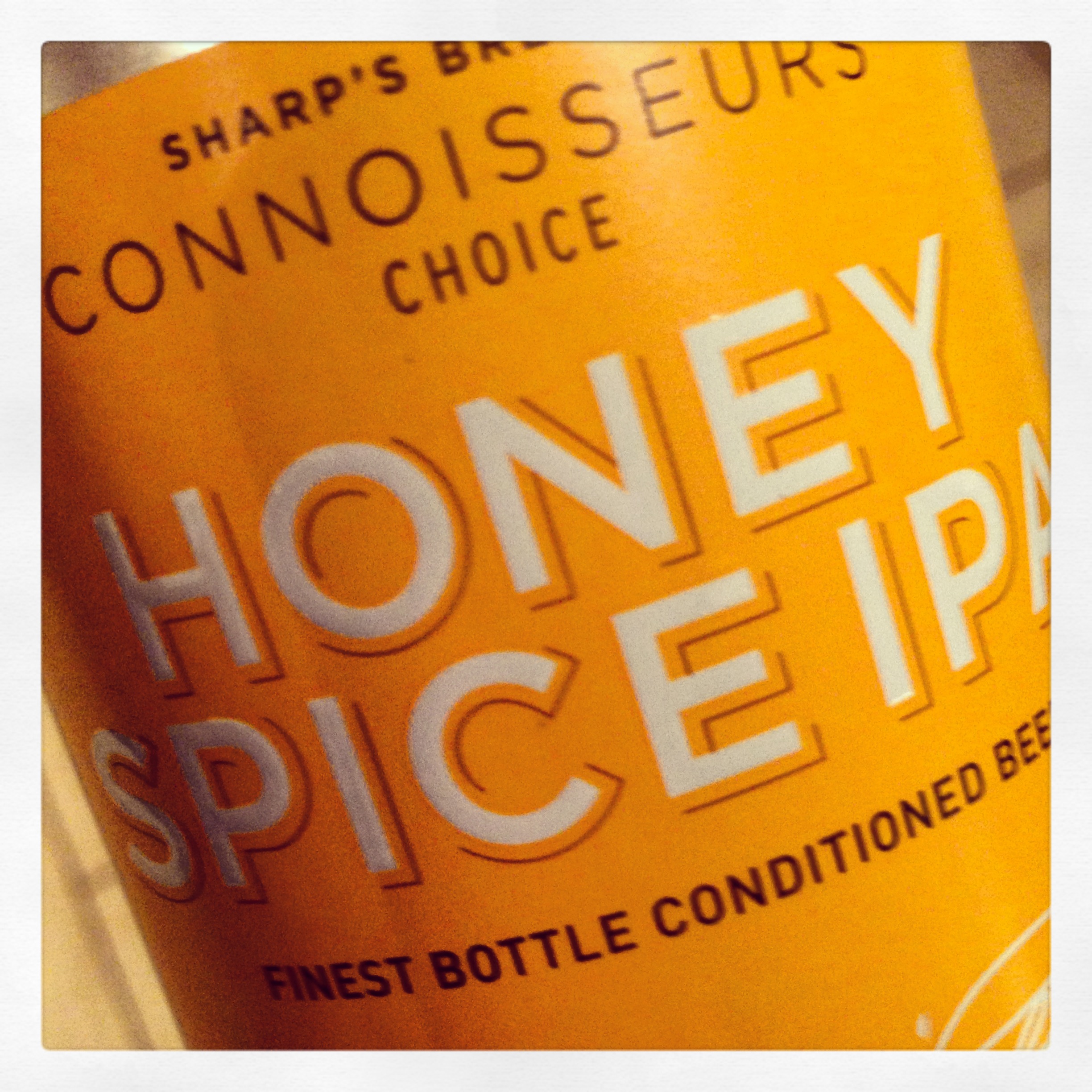
IMG_1097Less so the Honey Spiced IPA though. This was is still a bold 6.5% ABV but more accessible – accessible in that ‘caramel and seasalt’ combo sort of way.  In this case, we have honey and black peppercorns. This particular alchemy produced an aroma part expected, part surprising. Expected: a caramel toffee sweetness; unexpected: a clear whiff of gooseberry skins and Swizzels Matlow Tutti-Frutti chews, presumably from the combination of malt and honey sweetness.  There’s an amazing depth of flavour too, hop leaf to the fore, then chewy caramels, then the gentle warming from the black pepper and later a mild fizz on the tip of the tongue.

Where this all nets out is to make a bit of a mockery of all the ‘what is craft beer?’ discussion.  What I’m after is a healthy brewing world with the big boys investing and supporting interesting beers, leaving space for the start ups and the reputation of beer as a whole on the rise and influencing the Government into taking a grown-up stance to social and financial issues like taxation.  Brewing up in Cornwall, we have a little snapshot of how it could be.

© Beer Tinted Spectacles, 2014

The Unpronouncables

Many years ago a major British brewer bought a little Czech brewer shortly after the fall of the Iron Curtain. The brewer was the eminently pronounceable ‘Bass’, the acquisition was the eminently unpronounceable ‘Staropramen’.  The plan as I recall it, being on the periphery of events at the time, was to leave the beer well alone but doing something about the name. Something shorter. A trim bar call. Something… well, something pronounceable.   Fortunately, that plan was kyboshed by the Chairman of the company who issued an edict: “And don’t go calling it ‘Star’ or something’.  The rest is history (so far).

From a branding point of view, having a snappy, often short, typically horizontally aligned brand name is the desired state. ‘Avis’ is an often cited example of good practice. Strong colours; able to fit easily within your eye line and most importantly, memorable and pronounceable.  Brewers though like to stick a hop stained finger up at such ‘rules’.  My personal favourite was a German beer that my old company imported from Germany. Its name was ‘Treffliches Altenessen Gold’.  The ad line was a witty, “Treffliches Altenessen Gold. Ask for it by name”.  Alas, the powers that be did shorten that one to ‘T.A.G.’.   Czech beers too, do a good line in naming tongue twisters: to an English speaking tongue, they are difficult to say; to an English seeing eye, they are difficult to read. All of which adds up to their beguiling authenticity.

Less typical is finding a British or American beer that plays by the anti-brand rules. They do exist though; indeed I was lucky enough to drink one of them this week.  The beer in question is an American classic, now imported to the UK by a British classic, Adnams. The brewery in question is Lagunitas Brewing Company; the place of origin Petaluma, California.

Let’s deal with Petaluma first: to get there we need to travel twenty odd years into the past and many miles distant to the wave lapped Lincolnshire coast.   Not that Petaluma is near Grimsby, but it’s through a Grimbarian connection that I first came across it. Petaluma is an area of South Australia known for its fine wines. My brother, being manager of a wine and spirits warehouse in Grimsby, conspired to buy some Petaluma Chardonnay with damaged labels which were declared unfit for sale. From there it found its way to me and my association with Petaluma was made, and the connection was very Antipodean.    So it was ruddy great surprise to pitch up in Petaluma in 1999 on a holiday in California. Quite threw me it did, what with it turning out that there’s a Petaluma in northern California too; and that this same American Petaluma is in the wine producing area, where they too, make fine wine.  All we need now is Grimsby to be twinned with Petaluma and my hippocampus shall explode in shards of shrivelled grey matter.

Lagunitas IPA_fotorBut it’s the beer I’m interested in and that beer is Lagunitas IPA.  Or rather, as it whispers on the label, ‘say….  “lah-goo-KNEE-tuss”’.  Ok, maybe I’ve been pronouncing it wrong, but I know that my taste buds aren’t deceiving me: Lagunitas IPA is an absolutely classic American IPA. I’ll go further, it’s a bell-weather for its style.  Cascade hops feature heavily in the mash but lightly in the  finished beer. The aroma is grapefruit; pure, clear, uplifting. The beer pours with a rolling cloudy density that clears to leave a dense foam; a foam that mollycoddles the aroma, protects it, focuses it.  The tell-tale tree rings of a fine beer are left as you drink it. For a beer of 6.2% alcohol, its punch is delivered through a velvet glove and dances around the ring of your taste buds gently, not feeling too inebriated, leaving you wanting another.

Little wonder that this is one of America’s larger craft brewers.  Little wonder that this is a celebrated beer. Little wonder that only one word can sum it up:    Mag-nif-i-cent.

© Beer Tinted Spectacles, 2013