The Unpronouncables

Many years ago a major British brewer bought a little Czech brewer shortly after the fall of the Iron Curtain. The brewer was the eminently pronounceable ‘Bass’, the acquisition was the eminently unpronounceable ‘Staropramen’.  The plan as I recall it, being on the periphery of events at the time, was to leave the beer well alone but doing something about the name. Something shorter. A trim bar call. Something… well, something pronounceable.   Fortunately, that plan was kyboshed by the Chairman of the company who issued an edict: “And don’t go calling it ‘Star’ or something’.  The rest is history (so far).

From a branding point of view, having a snappy, often short, typically horizontally aligned brand name is the desired state. ‘Avis’ is an often cited example of good practice. Strong colours; able to fit easily within your eye line and most importantly, memorable and pronounceable.  Brewers though like to stick a hop stained finger up at such ‘rules’.  My personal favourite was a German beer that my old company imported from Germany. Its name was ‘Treffliches Altenessen Gold’.  The ad line was a witty, “Treffliches Altenessen Gold. Ask for it by name”.  Alas, the powers that be did shorten that one to ‘T.A.G.’.   Czech beers too, do a good line in naming tongue twisters: to an English speaking tongue, they are difficult to say; to an English seeing eye, they are difficult to read. All of which adds up to their beguiling authenticity.

Less typical is finding a British or American beer that plays by the anti-brand rules. They do exist though; indeed I was lucky enough to drink one of them this week.  The beer in question is an American classic, now imported to the UK by a British classic, Adnams. The brewery in question is Lagunitas Brewing Company; the place of origin Petaluma, California.

Let’s deal with Petaluma first: to get there we need to travel twenty odd years into the past and many miles distant to the wave lapped Lincolnshire coast.   Not that Petaluma is near Grimsby, but it’s through a Grimbarian connection that I first came across it. Petaluma is an area of South Australia known for its fine wines. My brother, being manager of a wine and spirits warehouse in Grimsby, conspired to buy some Petaluma Chardonnay with damaged labels which were declared unfit for sale. From there it found its way to me and my association with Petaluma was made, and the connection was very Antipodean.    So it was ruddy great surprise to pitch up in Petaluma in 1999 on a holiday in California. Quite threw me it did, what with it turning out that there’s a Petaluma in northern California too; and that this same American Petaluma is in the wine producing area, where they too, make fine wine.  All we need now is Grimsby to be twinned with Petaluma and my hippocampus shall explode in shards of shrivelled grey matter.

Lagunitas IPA_fotorBut it’s the beer I’m interested in and that beer is Lagunitas IPA.  Or rather, as it whispers on the label, ‘say….  “lah-goo-KNEE-tuss”’.  Ok, maybe I’ve been pronouncing it wrong, but I know that my taste buds aren’t deceiving me: Lagunitas IPA is an absolutely classic American IPA. I’ll go further, it’s a bell-weather for its style.  Cascade hops feature heavily in the mash but lightly in the  finished beer. The aroma is grapefruit; pure, clear, uplifting. The beer pours with a rolling cloudy density that clears to leave a dense foam; a foam that mollycoddles the aroma, protects it, focuses it.  The tell-tale tree rings of a fine beer are left as you drink it. For a beer of 6.2% alcohol, its punch is delivered through a velvet glove and dances around the ring of your taste buds gently, not feeling too inebriated, leaving you wanting another.

Little wonder that this is one of America’s larger craft brewers.  Little wonder that this is a celebrated beer. Little wonder that only one word can sum it up:    Mag-nif-i-cent.

© Beer Tinted Spectacles, 2013

Little Touches

The little touches around beer brands aren’t the first thing you notice. They come to bear over time. Too often, what gets talked about is just the dimensions of the beer itself – the aroma, the taste, the mouthfeel – or the brewing process; the brewer, the kit, the setup.  But I like the details.

IMG_0546Bottle embossing: more cost; more delight. Here the lovely twist of the River Thames around the base of a London Pride bottleMy past was a world of Big Beer. It’s a world of ‘cost optimisation’.  It’s a world where, for the most part, the joy of beer is slowly being sucked away. The details which make a difference over time cannot be justified against ‘return on investment’ criteria, nor often can you do the maths anyway. In the war of attrition the details get eaten away. In time, even the people employed to steward the brands over the long term have to give way to the arguements of cost in the here and now.  Have you noticed for example how lager bottles are getting lighter? Bud bottles used to be a deep brown. Hold an empty bottle now it’s no darker than a Ray Ban lens. The rationale: resource protection (Save the planet!). The real benefit: lower cost.  How bottle neck foil has disappeared over time? Not scratched off by the thumbnail of the drinker (who always prefer it) but scratched from the product cost by the accountant’s relentless push for cost reduction? And have you noticed how beer labels are thinner and smaller?  Or how cans, once you pour them crinkle like tin foil?

IMG_0550
Old Peculier: a design agency didn’t do this…


Other changes are less visible but more pernicious – like taking the ‘oxygen scavengers’ out of bottle crowns that protect the beer freshness but cost half a penny more; or making the card of your multipack thinner so it’s cheaper but as a shopper less stable to carry and more dangerous when taking it down off the shelf.

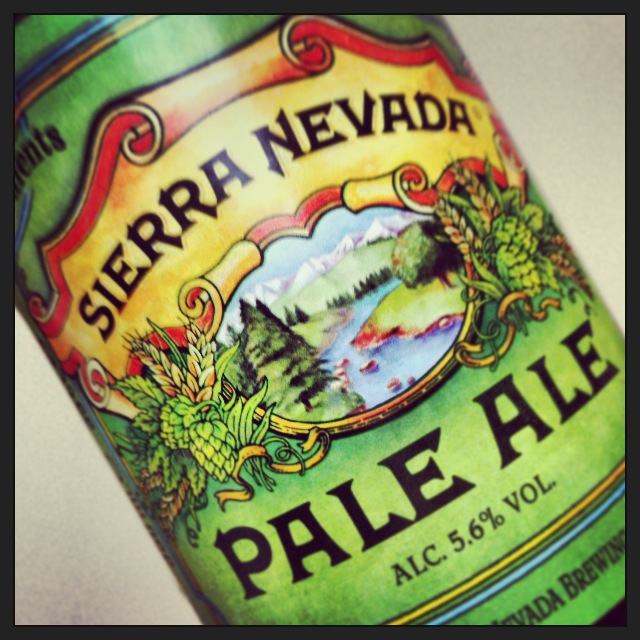
Thing is, there comes a point where the drinkers notice. Take Stella Artois: it is now available in a 284ml bottle – to allow them to hit attractive price points I assume.  But whoever heard of a Belgian lager in a British Imperial bottle size? And who cares that it’s 284ml – why not make it 275ml like the others and damn the torpedoes? All I care about is that it’s not 330ml like it used to be and poor value as a result.   Drinkers do notice beautiful labels like Sierra Nevada or Kernel. Drinkers do notice beautiful, embossed bottles like London Pride. Drinkers do notice quality materials like the labels and foils on the Thornbridge range.

IMG_0554The Sierra Nevada label – like a map you can read it differently every time, seeing some new detail.We should celebrate the details. We should cherish the beers from the brewers who recognise that drinking beer is more than just drinking beer, but an experience that pleases all the senses and recognise that sometimes, despite what our financial advisers might suggest, you can’t put a price on it.

© Beer Tinted Spectacles, 2013

The Session #77: IPA: What’s the big deal?

the session beer blogging fridayThe craft beer movement is gaining momentum – in the U.S., U.K, Italy, Scandinavia, Australasia – drinkers in these traditional and mature beer markets are broadening their repertoires, hearing the voice of craft brewers and slowly opening up to a new philosophy – of difference, of experimentation and of expectation of choice.   And India Pale Ale, or IPA, is the poster boy of the movement – in its well structured, challenging yet rewarding, countenance – it stands for everything that large scale manufactured pale beer is not.  Yet it is in those pale, ‘lagery’ seeds of why IPA is a big deal.

According to the latest studies from the Neolithic Cerevisial-Archaeology Unit in Portland, Oregon* beer started as a bready, mushed up foodstuff, mixed with water in ceramic pots and left to stand whilst the Godisgood worked it’s magic and turned it into a hearty, safe, nutritious drug. And although brewed significantly better – beer remained a dark, chewy, opaque food replacement until the nineteenth century. No wonder people enveloped lagered beer so in a revolutionary embrace.  It was easier to drink, eminently refreshing and visually appealing – a beguiling, magical, experience – almost incomprehensible given everything they had drunk up to that point – it would be like having KFC Chicken Nuggets that actually contained chicken.  After two years of pretty much exclusively drinking pale ales and IPAs for the last two years, I lived through something of this experience when I recently cracked open a bottle of four of Pilsner Urquell (see http://www.beertintedspectacles.com/?p=369).

And then, a few days later, I reverentially removed a bottle Sierra Nevada Torpedo from the beer fridge, an ‘Extra IPA’, 7.2%, one of Chico’s finest.  Just levering off the crown led to an attack of citrus fruit aromas, then on pouring, a billowing, off-white head, beautifully constructed and lacing down the glass sides with each sip like tree rings showing their annual growth throughout the heartwood. The maltiness had a walnut bready character, biscuit but with some nuttiness – Hob Nobs maybe?  Yet despite its considerable punch, it was a refreshing, drinkable beer – all the things that I had experienced a couple of weeks prior but with a well brewed lager.

So I think the ‘deal’ is this:  Pale Ale represents two things. Like lager it is a base: a base for challenge, for experimentation, for moving beer on, for saying, ‘Oh, I like this, but I think I can do better’.  Pale Ale becomes IPA, IPA becomes Double IPA, Double becomes Extra, becomes Black, becomes Cascadian, becomes Indies, becomes Pacific.  It’s a becoming sort of beer.  Unlike lager though which over the last 40 years, has got progressively lighter in alcohol, less bitter and paler in colour, IPA turned left at the lights, not right, and we see some of the beers that writers fret, fete and fight over today.

And then there’s adoption.  It’s a simple human trait – we want to prove how we’re different. How we’re our ‘own man’, how we’re independent.  IPA is not my Dad’s beer, blimey, it’s not even my older brother’s beer…it’s mine…. but most of all, IPA isn’t everything else. It isn’t mass brewed, it’s revolted against its Burton on Trent, Imperial roots and become a tattooed punk with multiple piercings through places too tender to speak of;  a banner waving revolutionary demanding the end of the old order.

And we all have a bit of the revolutionary in us, don’t we?

*If only.

©Beer Tinted Spectacles, 2013

Branded Glasswhere

There’s a quiet revolution going on with beer glassware. I remember when I was at University down in Exeter it was a real struggle to get your pint served in the correctly branded glass. In fact, it was rare to even see a branded glass. Guinness was the exception, so much so that it was quite typical to get a pint of Director’s or Bass served in one, often leading to me asking for it in a plain glass instead (I have nothing against Guinness but somehow any old pint in a Guinness glass spoils the experience both of the beer you are drinking and your future pints of the black stuff too).  Packaged beer was even worse. Frankly, if I asked for a glass with my bottle of swanky lager I was given a thoroughly gone-out look. ‘Look at that wazzock, wanting a glass with his beer instead of necking it from the bottle like the rest of us. Knob.’  Today you may get a glass designed specifically for the bottle.  But back then it wasn’t a case of brand glassware but rather branded glass where?

What really brought the change home was a conversation with an ex wine marketeer,  a friend of mine who has put me right on a lot of commercial issues facing the wine boys which I as a beer boy had been quite ignorant of, if not thoroughly mistaken over.  One of these issues was glassware.  Wouldn’t it be great to have an industry standard set of beer glasses to ensure that each type of beer was served in the right way? This would keep it easy for publicans….not swamping them under a sea of different shapes of beer glasses, or having them confronted by oafs sending their beer back if it’s served in a Guinness glass.  The wine boys: they have it sorted: elegant glasses, consistent across pubs to bars to upmarket clubs. I even attended a beer dinner at The White Horse in Parson’s Green where this was raised.  But funnily enough, I as with many others, was mistaken.

The first issue is how the wine makers see their challenges.  One big issue for them (perhaps not for drinkers but leave that to one side for the moment) is a lack of wine brands. Coupled with over supply this is leading to many wine markets suffering extreme price deflation and discounting, and a huge differential between the pricing drinkers experience in the on trade vs supermarkets. Whereas in beer the difference is double (using the UK example but increasingly this seems the rough rule of thumb in many markets) in wine this can be anywhere up to fourfold. And wine ‘all looks the same’ to drinkers…a glass of rose may vary slightly between labels but there’s little else to distinguish them, including no branded glasses.  The plan: introduce branded glasses. Ah.  Which just goes to show that not only is the grass not always greener on t’other side but in fact, it could be pink with yellow spots.

The second problem has been listening too closely to the licensees. Publicans have it tough, that’s for sure, not only have they got the issues with escalating duty, supermarket cut-throat deals and changing leisure patterns impacting on their business, they also have to run a complicated little business with long hours, the vagaries of staffing and recruitment, coping with weird laws and bylaws, offering food and getting their drink range and quality right. But this doesn’t always mean they appreciate the best way to run their businesses. And beer glassware is one example. If you took operational considerations to the nth degree then you would have standard height, stackable, toughened (shatter not shard to prevent glass injuries), non branded (doesn’t wash off in the dish washer) in two sizes, pint and half, capable of being used for beer, spirit long drinks and soft drink too. Oh, hang on, this is often standard fare in pubs in the UK. So, they’ve got it right, yes?

Nope. Think of your own experiences.  Here are some of mine in the last few weeks. In the Lakes, I had a pint of Black Sheep in The Bridge in Buttermere. Right glass, right setting and definitely the cause for a second.  A bottle of Erdinger nearer to home, in its preposterously curvaceous tulip glass; on holiday in Lanzarote a glass of Estrella Galicia in a handled, frosted glass; numerous bottles of Nastro Azzuro and not just in Pizza Express; in Prague a fantastic cellar-aged Žatec in a simple pilsner glass. I could go on. The point is that the glass is the fireworks over the Disney castle. The theme park is good, but those extra details make it memorable, lift it, make you want to go back.  So it’s a fine thing to see Fosters promoting their new glass; to see Stella Artois continuing to push for sales in its ‘chalice’, for Carlsberg introducing the wonderfully angular San Miguel glass, or abroad for brewers like Boston Beer investing research and development money in the right glass shape for Sam Adams Boston Lager. And sure. They get stolen, but if ever you wanted advertising in the home and prompt to buy the right beer for the right glass then surely this is a investment worth making (or sell them to bars for the price of a non branded glass – bars need to buy glasses anyway and this reduces the hit).

But why is this? What is behind the transformational effect that something as simple as a branded glass has in the purchase of a glass of beer?  Interestingly, the psychology of buying sheds some light on this. Basically when we buy, in fact when we plan to buy, there’s an emotional upside that impacts our physical state: endorphins raising our anticipation to a peak, the apex being when you actually hand over the money and buy. Thereafter the downside kicks in, big for a TV set or clothes and so on, but for a beer is pretty small (one reason beer has traditionally been described as ‘recession proof’). And the branded glass? It simply accentuates the positive …. it’s a triple win, it shows the brewer cares, the pub cares and you can show off your distinctive choice overtly.

Now ok, clearly you can only have so many branded glasses in a bar. But here is another reason for bars to sell a smaller range, with higher throughput and therefore fewer problems with glass storage and serve (as well as all the upsides of beer quality).

Back to that beer dinner I mentioned earlier. As the debate rolled about different issues, out came pudding. And with the pudding came some Trappist and Abbey beers. Westmalle was one, served of course in its Communion style stemmed glass, deep-walled and thick painted. It’s no exaggeration to say that celestial quiet filled the room for the brief moment it took to pour. There, I thought to myself, is the last word on the subject. Whisper it quietly, but ‘Vive La Revolution’.

© David Preston, Beer Tinted Spectacles. Originally posted on Posterous, April 2012

The Session #70: Sausages

the session beer blogging fridayThis month’s communal beer blog is about ‘Hype’ in beer. Well it got me thinking about one of my favourite texts on branding – a little, easy to read book by David Taylor entitled, ‘Where’s the Sausage?’ With a name like that, it would be easy to classify it along with classics like ‘Who Stole My Cheese?’, ‘Kiss That Frog’ and other such daftly named tomes with zero afterlife, but no. ‘Where’s the Sausage?’ has a serious, memorable and most of all common sense message:  in all your marketing efforts, if you build your brand on dodgy claims and weasel words, if you believe the hype so to speak, then you are building your house on sand and at some point it will all come crashing down.  Or, as a wise old sage of a boss once put it to me, ‘If you put red diesel in the tank son, don’t suck on the exhaust’.  In the case of ‘Where’s the Sausage?’ the exhaust sucking is committed by a Marketing Director (ex advertising agency, as they always seem to be), who forgets the proud porky legacy of this particular butchery concern, and ambitiously moves them into sausage (read: “Meat Feast!”) pizzas.  And Italian sausage at that. In so doing, the distinctiveness, the quality and most importantly, the truth is lost. Without spoiling this future Hollywood hit for you, the day is saved by a couple of old boys who snuffle in the truffles to find out what the company did best, and make it appropriate for the market today.

SausagesAnd sausage is an appropriate metaphor for beer on two counts. Firstly, some beers actually taste of sausage. No, really.  Empirical evidence, of one, has demonstrated that Aecht Schlenkerla Rauchbier (a Bavarian smoked beer) does taste of spicy salami amongst other things (car tyres?)

Secondly, there’s the act of slicing the sausage. Classic brand building thinking has you hunting for unique selling propositions for your brand. For finding a new slice on the category.  To demonstrate this, and in deference to my friend and ex colleague Chris, let us at this point refer to the case of the humble tomato.  It was not that long back that you went to the supermarket and you bought a bag of tomatoes.  Snooker ball size. Round. A shade of red, generally. Typically loose, but sometimes pre packed in 6’s in to a tray with plastic wrap round it.  Then the hype begins: ‘Tomatoes sales are growing, how do we increase them further?’   A creative session is organised. Suppliers are invited in. Growers get together.  Bigger multipacks. Smaller mulitpacks. Smaller tomatoes. Bigger tomatoes.

‘We need to make them more glamourous, give them more appeal!’ ‘Beef tomatoes’ ‘Cherry tomatoes’, ‘Plum Tomatoes’ (fresh not tinned), ‘Mini Plum Tomatoes’.

‘Sales are slowing, we have to make the tomato sexy.’   ‘Santos Plum Tomatoes’, ‘Sicilian Mini Plum Tomatoes’, ‘Vine ripened tomatoes’ ‘Green tomatoes’

And on, and on.

For a while sales increase. And like blood around a floating corpse, sharks begin to circle. More supermarkets get involved.  Growers swap from unfashionable crops (like hops, or apple trees) and build greenhouses for their tomatoes. Yet at the same time, imports increase as the Dutch and the Spanish eye our supermarket aisles longingly. Then the Americans pitch in the off season, and before too long the Chinese too.

And the result?

Sales begin to flatten. Shoppers don’t know where the hell to find tomatoes. You know, the ones that are snooker ball size, round and red… lost in a sea of senseless packaging and niche offers that you only buy at Christmas. So competition increases, prices come down (‘Great news for the consumer’ chime in the Government, productively), growers lose their margin and ultimately sales drop away as interest in tomatoes falls away.

So be careful what you wish for beer world.  Look at lager brands in the UK:

Sausage: you start with Skol and Long Life. 
Slice 1: sales begin to grow, incomes Carling Black Label , Carlsberg and Heineken. 
Slice 2: we need to add more appeal: Fosters, Holsten Pils, Becks. 
Slice 3: we need to sex it up: Grolsch swingtops, Stella Artois, Carlsberg Export.Slice 4: we need to get adults drinking on more occasions: stubbies, embossed long neck bottles, 
Slice 5: we need bigger packs for Christmas: 8s, 12s, 24s, 18s, 16s, 
Slice 6: what if people could give our brand as a present? glass packs, collector schemes. 
Slice 7: I don’t want sex, I want lust! Peroni, Peruvian beers, Thai beers.  
And the result?  Death by 1000 cuts, or at best, one of those part segmented saveloys you buy at the chippy… a supermarket range you don’t know where to start with and boxes of beer priced cheaper than bottled water.

My advice: heed the warning of history. Cask, craft and bottled ale may be a reactionary response to the slicing of the sausage. We can enjoy it now, bathe in the revolution. But at what point does the magnetism of the knife begin to take hold? More slices? More claims? More weasel words? Less truth?

Triple Black Pacific IPA anyone?*

*Served in ‘une chalice’, of course

© David Preston, Beer Tinted Spectacles, December 2012