
Occasionally, professional and personal lives overlap – and this was the case when Simon at Budweiser Budvar sent me a little box containing some Budweiser Budvar goodies. He wasn’t doing this out of the kindness of his heart, although knowing Simon as a kind-hearted sort of guy this was possible, but no, Budvar have redesigned and launched their UK web shop to boot and he’s trying to drum up support, understandably.
Simon doesn’t need me to write nice things about Budvar. He’s got plenty of beer writers who are much better known waxing lyrical about the company, for good reason. Despite some pretty shaky times in Czech brewing since the late 90s, when free-market capitalism renewed its roots in the country and Czech brewers of all sizes were being gobbled up by larger brewing concerns, this state-owned brewery has remained true and consistent to brandishing the torch for the traditions of Czech lager brewing. Simple things like sticking to regional ingredients (Moravian malt, Žatec hops, local aquifer water you know versus, Thames or Severn Trent), using double decoction mashing regimes, avoiding high gravity brewing and heaven forbid, actually lagering their beer for the weeks it takes to create those subtle layers of flavour stratified with gentle, natural carbonation.
So, when a brand such as this is redesigning, my instinct is to hold my breathe and hope. The paying side of what I do is helping companies create and strengthen their brands. Oh, sure, many brewers hate the thought of brands, many beer writers too, the late Michael Jackson included. It’s not about brands, they say, brands are impersonal. It’s about the beer. It’s not consumers, it’s drinkers. Brands are what Big Beer do…sniff, sniff, snivel, snivel etc.
Which is all very well, except they’re wrong. Because brands aren’t simply a marketing ploy, they’re a shortcut that the human brain uses to make decisions easier. ‘Reducing cognitive load’ is the behavioural science name for it. And the annoying thing for the likes of our nay-saying brewers and beer writers is that (when done right) it’s proven to work.
Arguments to one side, what everyone can agree on is that how a brand shows up – it’s name, the beer itself, the design, the points of interaction – like website, draught font, glassware, bar gear and so on – are critically important to how a brand is understood, remembered and bought.
 And Budvar made a bit of a mis-step last time. “B-Original” they declared in a fit of trying-to-be-clever. “B-Free” announced their non-alcoholic variant (errr – you’re a beer, not Braveheart). Strangely, “B-Dark” trumpeted their, you guessed it, dark lager and not switching off the lights or internet. It was always wrong. It looked wrong. It sounded wrong. It felt wrong. It was a classic brand trying too hard. Like someone desperately trying to be something they’re not. The label of the bottle sported a jaunty ‘swoosh’ in gold. ‘We can be like Nike’ it said, fundamentally misunderstanding the brand and its context.
With some trepidation then, I opened this little box from the Budvar web shop and silently whooped with joy. If, on the last design, some wag had told the Board that Budvar needs to appeal to Millennials by being (sorry, B-ing) fresh, young and contemporary, now Budvar is doing exactly that by reframing the task, staying true to itself and just being timeless for everyone.
 Look at the design: there’s no missing the name (task 1 achieved). There’s no missing the simple descriptor (task 2 achieved). There’s no missing the premium values of this brand because they ooze off the package (tick, tick, tick): the crest of České Budejovice; the matte ink, the textured feel; the gold can top with brand-red tab. And a composition that can breathe because it isn’t cluttered and rammed-full with “benefits”. Without saying anything, everything about it says, “This is the great Budweiser Budvar…. come to me”.
Bloody hell. You may ask, ‘Who is this bloke banging on about a design and why does it matter?’
Oh, it matters. Brands are built when two things fuse together as one. The message and the memory structures – the name; the colours; the symbols that allow the brain to register and recognise it. All too often, brands throw around “re-design” like its a sign of excitement and success. No, it’s a sign of failure. I’m not saying that Budvar failed previously – that would be going too far – but if your customers struggle to recognise your package and when they do, not like it, well that’s a big problem.
And this is the beauty of the Budweiser Budvar redesign. They have taken the wonderful, memorable assets that they already own (in people’s minds) and simply refreshed them -thereby reinforcing what their brand is about. The packaging; the glassware; the web shop and the merch all unequivocally screams the brand. And if you think having a distinctive brand isn’t important in this game, good luck to you.

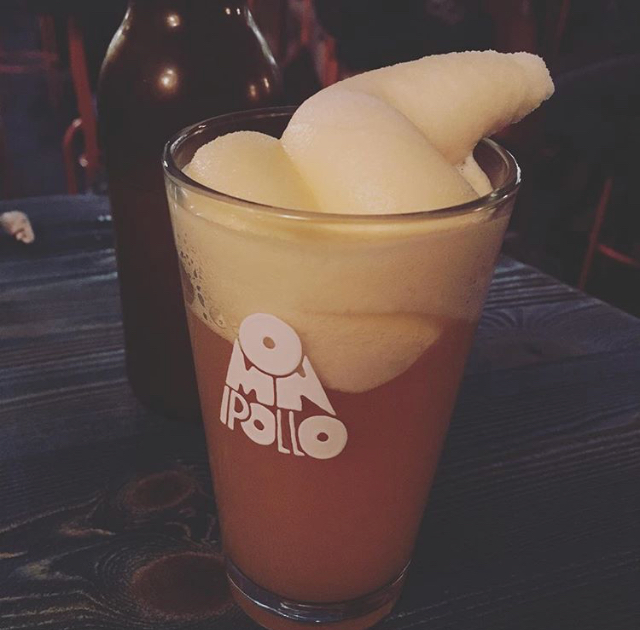 Just occasionally, brewers have really crazy ideas. I remember once, when working in Big Beer, someone presenting this idea for beer slushies. It didn’t make the cut. Then there was the ultra-caffeinated beer that boosted your mojo. Or the one infused with tequila (oops – bit late to the party on that). Then this crazy sh*t springs up in my instagram feed, courtesy of @maltjerry. Beer purists may object, but not me. If you don’t push at the edges everything gets boring. And besides, this beer, a Passionfruit Cheesecake Extra Sour from Omnipollo in Sweden has a rakish air of 1950s beehive hairdo, crossed with Mr Whippy, crossed with bleached-out squirty dog turd. What’s not to like? Now, where did I put my slushy machine…
 Possibly the biggest issue, wide ranging in scope and for some pernicious in nature is rooted in the rise of craft beers that came about following the introduction of Small Brewer Duty Relief in 2002. A brief background: the increase in the number of breweries was something to be celebrated by CAMRA, they played a pivotal role in the policy and there’s no doubt that the increase in small breweries went hand in hand with the increase in number of cask beers available, not just because of our brewing and drinking culture but also because the process of brewing and packaging cask beer is more straightforward (which is not to say it is easy) and fundamentally, cheaper. There’s no need for pressurized kegs, expensive pasteurisation and filtration systems, automated filling machines and all the paraphernalia that attends filling kegs. With beer in casks, the ability to keep, handle and deliver a quality product is as much the responsibility of the publican as it is the brewery, if not more. And there in a nutshell, is the rub. Many craft brewers, not just the more ambitious, but also those dedicated and passionate about quality soon have an issue with cask. Put simply, that precious quality is just too variable. The result: more investment in kegging; more stimulus from the U.S. brewers (untroubled by the cask / keg question) and more ‘craft keg’ beers available.
 Beer Tinted Spectacles