
The Session, a.k.a. ‘Beer Blogging Friday’, is an opportunity once a month for beer bloggers from around the world to get together and write from their own unique perspective on a single topic. Each month, a different beer blogger hosts the Session, chooses a topic and creates a round-up listing all of the participants, along with a short pithy critique of each entry. This month’s topic is hosted by Dingsbeerblog (http://www.dingsbeerblog.com)
 In the late 1980’s, three strands interwove at a crucial time for me which triggered my interest and enthusiasm for beer. The first was family – my older brother, in his first radical phase was an unwitting early proponent of slow food, and as he was building his knowledge of food, wine and to a lesser extent beer whilst at University his influence rubbed off on his younger brother when he came home. The second was friends: Dave Wilkes and his home brew to be exact. I’m not sure where Dave’s passion for home brew emerged, but what I do know is that it was a consistently deep brown, nutty concoction, served straight from the cask (something I hadn’t seen at that point in my hitherto sheltered life) and weighing in at what I’m guessing to be about 15% ABV¹. The third strand was the emergence in America of a beer tea party: new, interesting brews, attempting to throw overboard the homogeneity of typical US offerings. To a late teen in provincial UK, this was not learnt first hand. Rather, the source was Michael Jackson of course, both through a much thumbed copy of ‘The New World Guide to Beer’ and also through the particular episode of ‘The Beer Hunter’² where Michael travels to west coast USA and vividly brings to life this new narrative of US craft beer. As he takes the trip to the tip of northern California to celebrate the barley harvest with all the Anchor Steam workers, my beer idyll is born.
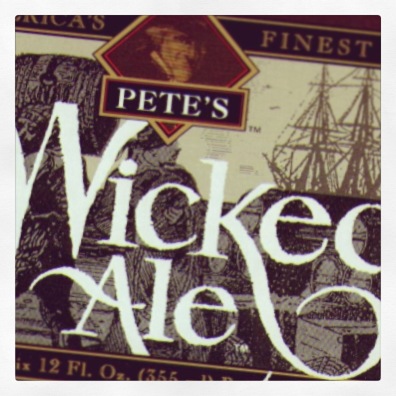
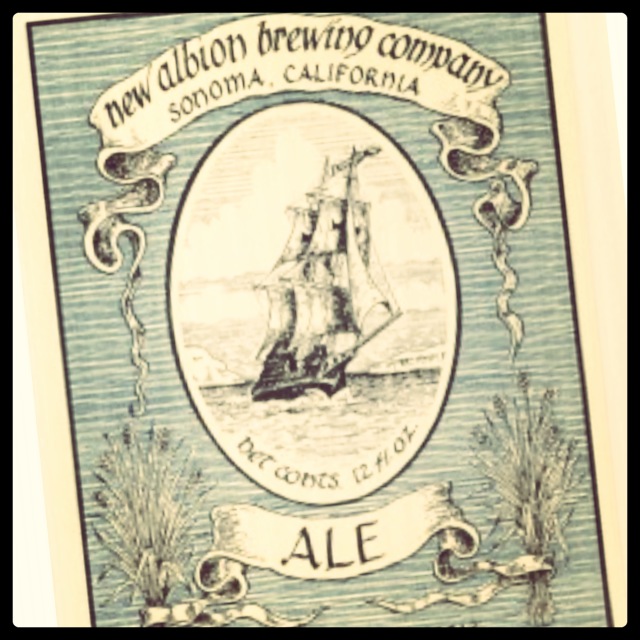 Over 20 years on, as I read Tim Acitelli’s excellent ‘The Audacity of Hops’ – an almost 50 year history of American craft beer, I realise how much each ‘culture’ is indebted to the other. If you can call it that of course: I’m not sure anyone in the ‘Old World’ would see much a shared tradition between say English beer culture and Bavarian beer culture – an important point when you see how the different European nations individually influenced the US scene. The first wave was largely inspired by English pale ale: could the early craft brewers like Jack McAuliffe create domestically brewed pale ale as flavoursome, as full on those he had drunk on his British travels? The name above the door giving away his influences: New Albion. Could Pete Slosberg devise a recipe as enticing as the brown ales he had drunk on his travels in Europe (I didn’t realise that the resultant, massively successful beer, ‘Pete’s Wicked Ale’ is no longer available)? Then later, wider European influence took hold, kick-started by Jim Koch reliably recreating his grandfather’s recipe for a Bavarian lagered beer in the form of Sam Adams Boston Lager but quickly and rapidly spreading into replicating, and attempting to better, beers from Belgium, Germany, France and beyond.
 I’m conscious of my own biases around beer and particularly my orientation toward well brewed and properly lagered Czech and Bavarian lagers and feisty and flavoursome US pale ales and IPAs in particular; but actually portraying a picture of the ‘Old World’ and ‘New World’ as a battle: us versus them isn’t overly helpful. The reality, as is so often the case, is defined more by the similarities than the differences. Riddled through both cultures are defining traits: a trigger event – a burning platform that great, idiosyncratic, varied beer was close to dying out. In the US’s case, Fritz Maytag heard about the brewery days before it was due to close down. In the UK, the dawning realisation that cask beer (and the infrastructure that supports it) was facing the same fate. Struggle – it’s easy to forget the perseverance, grit, setbacks and failures along the way. Many of the original wave of US craft brewers simply didn’t make it through the first wave of growth, starved of cash, resources, time or capital, they had to either close or stay niche. Most went under. It’s why I fear the same for many of the UK’s current crop of micro brewers. Time – it’s almost 50 years now since Fritz Maytag bought Anchor. It’s over ten years now since Gordon Brown introduced the progressive beer duty, the so called ‘Small Brewers Duty Relief’ and yet, you could argue that for most drinkers here, cask beer still hasn’t entered the mainstream. But more than anything else, what’s clear is how the Old and New World cultures are self perpetuating, each fuelling the other – the growth of craft brewing in Italy, inspired by the US, being a great example. I saw this for myself on a recent business trip to Milan, managing to fit in a short beer break after work one evening, and finding a craft beer bar that you wouldn’t expect to see this side of the pond – the most ‘mainstream’ beer available was Menabrea which enjoys, what? 2% of the Italian beer market? Or the spread of US hop varieties to the point where a number of UK beer aficionados are actively complaining about their over-use versus traditional British hop varieties. And finally, there’s the experimentation. The emerging narrative is that it’s a case of poacher turned gamekeeper, and the European brewers are only experimenting because of the boundary pushing of the US brewers. True to a degree of course – but not solely so. There’s been an experimental tradition in surprising and not-so-surprising European countries for many years – Belgium of course, but also in countries like Scotland, where brewing with traditional ingredients, or barrel aging is not a new phenomenon.
No, this is all a case of ‘and’. The real vibrancy between the craft brewers is the mutual support, the ready sharing of ideas and experience, the healthy competition that exists. It’s a culture that’s worth celebrating and enjoying across the whole world.
¹The fashion in beer books is to tell how home brew ‘transformed my expectations of how amazing beer could be’. With respect to Dave, this wasn’t the case, I think his home brew was a malt extract kit brew and it was pretty hard going. I seem to remember swirling my mouth out with a Heineken.
² Two links: http://www.youtube.com/watch?v=CtmxXgKU1o0, the beer idyll is at the start of part 2, http://www.youtube.com/watch?v=36BUK7lv-iU
©Beer Tinted Spectacles, 2013


 Beer Tinted Spectacles