It seems a rare thing nowadays for a beer not to have won a significant award and be shouting it loud and proud. ‘Winner! Taste of Eastmorland 2001’; ‘Winner! Borchestershire County Show, 1998’ or, actually, much more likely to be global in nature. The clues will be there: little golden gongs on the label, with indecipherable text and maybe a touch of spot varnish or embossing as a token of our pride. ‘Winner of the World Beer Cup, 2007’, or some such ceremony in Chicago dating back to, what, 1899? Forgive me if I come over as a touch cynical but these awards have always seemed like a Crufts ‘Best in Show’ award. Oh, I know they take a lot of effort to achieve, much pulling of hair and many a sleepless night; the equivalent of beery detangling and grooming no doubt, but, at the end of the day, they only really matter to other dog breeders. I own a Bitza* and she’s best in show for me, no matter what the bigwigs at The Kennel Club may say.
The truth is, the sparks that trigger a particular brand of beer to success and acclaim are more than the product alone. Not that having a distinctive product doesn’t help. Far from it in fact: many a GBBF winner has encountered production capacity challenges immediately as a result of winning an CAMRA award. But the slew of beer awards to date have only celebrated the beers – the liquids – not the significant other factors in the weave and weft in any brand’s DNA. Until now.
The Beer Marketing Awards, announced at the end of last year, will celebrate the marketing activity that has changed behaviour and attitudes of drinkers. Because even if you have a jaw-droppingly good beer, without others hearing about it, you might as well whistle in the wind. I remember Michael Jackson, dropping his head slightly and peering at me professorially over his glasses, and telling me (as a marketeer myself – and therefore a sub-species) that he didn’t like the idea of ‘brands’. For him, even using the term ceded too much influence to the marketeer over the brewer. Yet, ironically, what was Michael Jackson himself if not a great brand in the beer world: ‘The Beer Hunter™’ tells you everything. Brands are critical, vital. In fact, brands are business. And marketing is their voice.
The Beer Marketing Awards are a step to rebalance the world of beer recognition and to celebrate more than the brewer alone in creating success. Have a look at the website of the competition to see the categories (www.beermarketingawards.co.uk): but be assured of this: this is not just a competition for big companies with big budgets. ‘Big budgets do not great marketing make’ as a former boss of mine used to say (a salesman in fact). Yes, the awards will celebrate traditional advertising, but the truth is in a tightening legislative world, it’s getting harder to make an impactful advert nowadays, and expensive too. So the awards also recognise social media, design, public relations, competitions, sponsorship…even a brewery’s merchandise. Every commercial brewer in other words does marketing; and every commercial brewery is eligible for the competition.
So take a look at the website and post your entry (deadline looming so don’t delay). Who knows, you may be able to feature it on your packaging in what…a hundred years from now?
* You know, ‘bitza’ this and ‘bitza’ that.
Disclaimer: David Preston, a.k.a. Beer Tinted Spectacles, is a judge of the 2014 UK Beer Marketing Awards, and this blog does represent his heartfelt views.
“It’s truly a 21st Century City now”, John observed. The evening before he’d gone for a walk with his wife down to see the ‘Blood Swept Lands and Seas of Red’ – the display of poppies at the Tower, before they were removed. He and his wife had moved to the city from the west country almost 25 years before – not exactly the streets of gold perhaps, but when you’re from Plymouth you know the buildings must have a little more architectural merit than the post war concrete blocks that make up the port’s current urban skyline. And now we sat in a bar at St Pancras station, discussing business, but also reflecting on how this station, unbelievably threatened with demolition 40 or so years before was now a thrumming hive of connectivity and architectural dreaming writ large. A metaphor for the Capital’s transformation over the same few decades?
This same stretch of the Euston Road was certainly something of a journey from me. When I first worked in London, I was part of an itinerant ‘hit squad’ sales team, selling beer to off licenses throughout London from our base at the Posthouse on Carburton Street (I later learnt that it was ‘the’ prostitutes hotel but never saw any evidence to support this. Today it’s a very respectable Holiday Inn). I drive down, through the warren of streets around Swiss Cottage, along by Regents Park and down Albany Street past barracks and then menacing tenement style blocks and boozers to the top of the Euston Road. Although there were some grand buildings, Euston was squalid, St Pancras run down and Kings Cross best avoided. Today, hipsters are moving out to here and to Somers Town. The off licences we called on were nothing to be proud about: hundreds of Unwins, ‘Super’food and Wine (later, when running the London territory, my first sales call on a Monday was at a Superfoods on Shaftesbury Avenue, where there was already a queue formed before opening for the first chilled can of Tennent’s Super of the day). Pubs were either touristy or showy, or – in another sweep of generalisation – brewery tied, unimaginative and typically, pretty ragged. Grand Met and Whitbread carved up the market, the others fought for scraps. Most bars carried one of a couple of ranges of beer dictated by the national brewers. A foreign, imported lager was met with a surge of excitement. God, we even got excited about alcopops.
It may be stating the obvious to point out how much things have changed. But it’s worth underlining that this change is not simply dramatic, it’s revolutionary. Seeing small brewer IPAs or Porters on draught is nowadays nothing new, rotating casks with dizzying frequency. But for the same now to happen with kegs – and with the lager too – has really changed the rules, particularly if you are Carlsberg, Fosters or Carling.
Today, not seeing a Camden beer on the bar would be unusual down here, and the supporting cast is growing – London Fields, Brew By Numbers, Beavertown, a fridge full of Kernel – gosh, you’ll be as familiar with the beers as I am. And sure, not all are to my taste, but at least now I get the chance to try and swoon or gag from a huge and growing range of interesting beers, an option that wasn’t open to me in my 20s.
As an infrequent traveller to Larndon today, I get to see the city changes in stages not as an evolutionary curve but as the steps of change. And I get to keep my eyes open for the growing number of beer shops that would put Superfood to shame and make my memory of 9am super strength lagers a distant, and best forgotten, memory.
I know it’s my tendency, and that of other beer writers to focus only on beers that pass personal muster: new world IPAs, sour beers, perhaps discovery of a well hidden mild or brown ale and certainly not laaaager, dear boy (well, not the factory brewed lager anyhow). And if they (read: ‘I’) do write about lager it has to be ‘proper’ lagered beer; ideally all malt; hop restrained, double decocted and most, most, definitely lagered for a minimum of a month, ideally in a Bavarian or Bohemian cave or troglodytic vaults below a castle. For the record they do exist, and yes, the beer is better (in the main).
When I set off on the Tinted journey though I wanted to reflect a personal stance in my writing. It was, and is, ‘pro beer’. That is to say, whilst I may not enjoy or condone the beers and brewing practises of some breweries, typically those focused on a volume growth agenda and therefore targeting efficiency and profit over quality, integrity and craft, I wasn’t going to slag them off either. At least, not unless there was a clear rationale, a basis of a subjective truth; a deliberate contradiction in terms, I know. Goodness, I worked for a national, now multinational brewer for almost two decades and hypocrisy stinks: I am free to vote with my wallet and tastebuds and that’s what I have chosen to do. At the end of the day though, for a normal person, beer is beer is beer. If people like me piss in the proverbial pot it pollutes the whole thing.
And today is one of those days that justifies my stance. I am in the Canary Islands. My wife is swimming a staggering amount of lengths in the pool outside; the kids resting under a metaphoric shady tree for it’s 29 degrees, with a cooling breeze off the ocean, that oftentimes whips into violent, short-lasting squalls, hurling inflatables, whistling at windows. The landscape is stark but not bleak: this island is volcanic, the rock is young, black basalt, with deep holes where the gas and air hissed out as it cooled. Ever ingenious, man has worked with it; walls contrast in white; plants are tolerant of both drought and malnutrition, houses are concrete slabbed & whitewashed, unheated, airy. Water is scarce compared with our blessed isles further north. In short, you perspire just walking to the shop at 9am; air conditioning is blessing, a dip in the pool more so; a swim in the sea most of all.
That’s not to say that you couldn’t enjoy more beers here. Sadly perhaps, I love shopping on holiday (or on business trips away), it’s a short cut to local culture. And the beer range always depresses me around the mediterranean shores just as it does here too. Quick brewed, pale beers, 50 shades of magnolia. Lager by name but rarely lagered by nature. Yet, in an environment where you sweat just sitting outside, there’s something right about them. The alcoholic level isn’t debilitating; refreshment is promised and is delivered. As I type, I am drinking a Cerveza Dorada. It’s 4.7% ABV and it proclaims on the front, so I assume they deem it important, that it’s “100% malta”. Our apartment had some ‘Tropical’ beer steins, so I popped them in the freezer. Heavens! Heracy! A factory brewed beer, chilled to nut numbing temperature in the fridge and then poured into a frozen glass.
But here’s the rub. It’s great. The glass is exciting (no, really), steaming as the ice formed as I drew it from the freezer drawer; pouring the beer, you could hardly make out the amber body for the frostiness on the outside, I feared my lips would meld onto the rim. But no, it melted away and left gossamer strands of ice on the head of the beer. A beer which was OK by the way: it doesn’t profess to be an earth shatterer, and I wasn’t seeking perfection. It was a good beer, on a great occasion. And it was… right.
The Session, a.k.a. Beer Blogging Friday, is an opportunity once a month for beer bloggers from around the world to get together and write from their own unique perspective on a single topic. Each month, a different beer blogger hosts The Session, chooses a topic and creates a round-up listing of all the participants, along with a short pithy critique of each entry (see link, posted to comments in due course). This month’s Session is hosted by Boak and Bailey (www.boakandbailey.com) and is on the subject of traditional beer mixes. With it a challenge, we should find one traditional mix (no beer cocktails either) and recreate it; even order one in a bar (if you’re man enough)…
Funny how memory betrays you. As I recollect it, The Blue Moon was a large pub tucked underneath a railway bridge, just down from tightly arcing motorway slip road. It was mock half brick; outside mostly put to tarmac; desiccated hanging baskets hung wanly and the landlord had some missing stumpy fingers, a shiny hairless scalp and gold ring earrings. The regulars were gritty, speaking with a pronounced Derbyshire twang. “Noo” for ‘new’; “Naa” for ‘now’; “Ay up” and “mi’duck” being dropped in frequently, revealing the border status between Yorkshire to the north and the industrial midlands below.
In reality, my memory was skewed by time. A photograph taken from then revealed that the pub was actually a Hotel. There was nothing ‘Blue’ about it, it was just a ‘Moon’ (although had you seen the decor you might disagree). There was no railway bridge and the slip road was a good quarter of a mile away. The landlord, actually a Manager, and he sported fewer piratical gold rings than my false memory betrayed. But he, just as like his customers, did speak with that round, fruity, ruddy Derbyshire dialect. And he, just like his customers, drank ‘Mix’.
I was doing a management training programme, and Spondon’s Moon Hotel was my training pub. Sprawling Spondon, in Derby, is known for its ‘pong’ so expectations were low: was said whiff from off beer or from nearby Courtaulds? Yet, although I was only there for a couple of weeks, I jimmied in months of learning. Learning about pubs; learning about customers; learning about life in a roundabout way. Basic cellaring skills; tallying up the take at the end of the evening and most fearsome of all, serving behind the bar. Why fearsome? Two reasons: keeping tabs on ferocious Friday night orders for one; two, the terrible mockery inflicted when you didn’t know what the various ‘Mix’ orders were. It was a whole new lexicon: ‘Half & Half’, ‘Black and Tan’, ‘Bass and Gowd’ and ‘Mickey Mouse’.
A Bass & Gowd? The Bass was optional – any decent pale ale would do, but the Gowd wasn’t – referring to Gold Label. A favourite of my father law for whom a pint isn’t really a pint without a good viscous slug of Gold Label in it. This isn’t about flavour transformation: it’s about pure brawn; beer doping. The parallel with cycling doesn’t stop there. A decade or so ago such doping was rife. Judging by the orders at The Moon, one in five pints ordered by men over 50 had a gowd with it. Today would anyone? Then there was trial by ordering. Some customers wanted the Gold Label from the fridge; others – very particular others – wanted it from behind the counter. Others, cellar temperature, although they could bog off and get there own. And do you pour it in or let the customer? The whole lot into a half pint or serve them a pint and then let them add it gradually? A blummin’ barley wine minefield, nothing less.
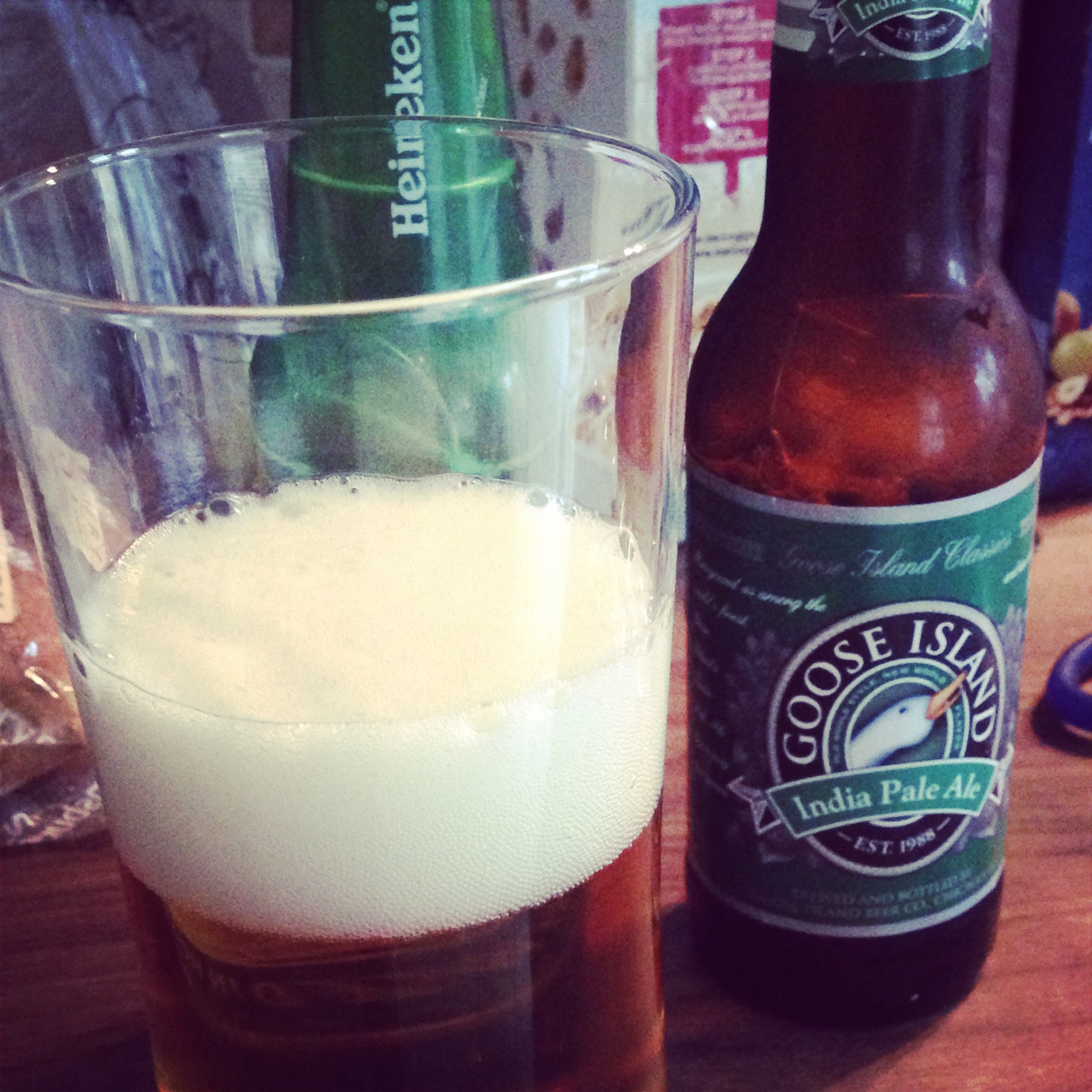
Not the mix for me. Instead, I chose the much more goofily monikered ‘Mickey Mouse’. An old boy in the Moon took delight in catching me out by ordering this, much as I’m sure he had for the proceeding 30 years with other all green round the gills bar staff. Turns out the Mickey Mouse was a simple mix of lager and ale. At the Moon it was Carling Black Label (the lager being poured first) topped up with an ale, in this case keg Worthington’s. And it was a mix – not a stratification as is popular in the U.S. where there’s a clear horizon between the two products in the glass. I chose the sweetish Heineken (export) – 5%, with its estery, pear drop aroma and a much more hardcore Goose Island IPA: hoping the upfront hoppy grapefruitiness and lingering bitterness would work OK with the sweeter lager with little finish.
What was I expecting? The best of both worlds perhaps – a less challenging American IPA that was more sessionable? A more rewarding factory lager: still with the structure and finesse of a lager but with more savouring qualities?
I got neither. Rather, the Goose got plucked – somehow not even an IPA-light but a rather muddy ale with the crisp hop notes hidden under a blanket. And neither did I get a lager-to-savour. Sure, it was arguably not the best pairing. A more robust lagered beer perhaps: Pilsner Urquell or maybe a Republika or Camden Hells? Maybe a less assertive Pale Ale would have been better: Sierra Nevada from the U.S. stable (I mean this relatively) or any of many beautiful British pale ales.
Ah, but there’s the rub. I’m not closed to the idea of mixing beers together, certainly not puritanical about despoiling the purity of an original recipe. Where I netted out though is that I’d rather go for a genuine beer cocktail, where the flavours of the beer are just one of many interwoven tastes from a wide gamut of ingredients, rather than mixing two ‘traditional’ beers and getting the worst of both or the best of neither. I’ll keep on trying them, but not with a sense of anticipation.
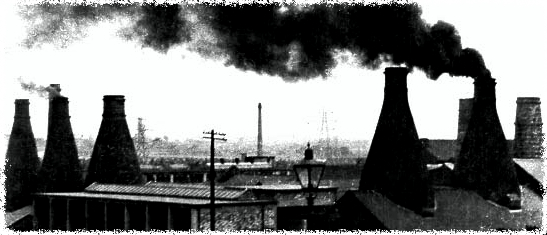
The six towns of the Potteries don’t have a reputation for being the most picturesque place roundabouts. Ask outsiders their opinion and you tend to get the old, “…but they’re such friendly people” response, which, when it’s clear that you’re enquiring about the architectural merits of Blurton or Sneyd Green, is such an obvious distraction answer that it doesn’t wash. Saying that, Potteries’ folk are really friendly in my experience – the friendliness that is borne out of close friends and families working cheek by jowl for generation upon generation; the friendliness borne out of industrial disintegration; the friendliness borne out of, let’s be honest, poverty. Unlike many British towns and cities built round one industry, at least Stoke* has been spared ‘heritage town’ status. You can see more than the marks of its industrial legacy; there remains a major ceramics industry – not perhaps the scale of the past and certainly in a very different form – but there all the same. Most often, today’s potters are in new(er) factories, but not solely. And the old Potteries’ vista is still there too – the eponymous pot banks pushing up like young asparagus shoots, searching for the air above the skyline – a skyline they once filled with smoke. Or the enormous brick factories, as long as a road, or queuing up along the canal sides. Some of these brutally beautiful buildings still have potteries in them (take a trip to Emma Bridgewater just outside Hanley, as one example, to see the potter’s skills being practiced still http://www.emmabridgewaterfactory.co.uk). It’s a setting, a culture, a way of life that has understandably defined the people of the area.
And where there was heavy industry, there was beer. It might not be the same open roaring fires of steel mills and hammer shops, but it was tiring, back breaking work all the same. Digging, heaping & milling the clay; lumping the wares; stacking the pot banks; making the saggars (and the saggar bottoms**) and the crucial job of firing the bank and judging its progress. Works up a thirst just recounting it.
I’m from the other side of the regional line, in the north west, with the Potteries being south from me, in the very north of the north midlands. It’s a city I’ve known all my life; close enough to feel defensive about it when people have a go but distant enough to be distant when needs be; and too distant to support either Port Vale or Stoke City. Yet, when it came to beer, there was always an attraction to the traditional old Potteries pubs when I was growing up. Round my way, the pubs were either large, ‘developed’ town pubs or country pubs of a more idiosyncratic nature. And my locals were normally Robinson’s or Greenall Whitley (‘I wish I was in Greenall Whitley land’ https://www.youtube.com/watch?v=uzsL6uE1ypg). But Stoke: well it was the land of the big Midland brewers: Bass Worthington, Ansell’s, Marston’s and ‘Jolly’ pub names: The ‘Jolly Carter’, the ‘Jolly Collier’ and of course, ‘The Jolly Potter’. And many of the pubs were, well, just public…houses. Go in the front door, left for the public bar, right for the lounge; two rooms and two beer choices, maybe three if the lager was on, and perhaps a bottle of Mann’s Brown or Bass No.1 behind the bar. And not much else. My, it was exotic.
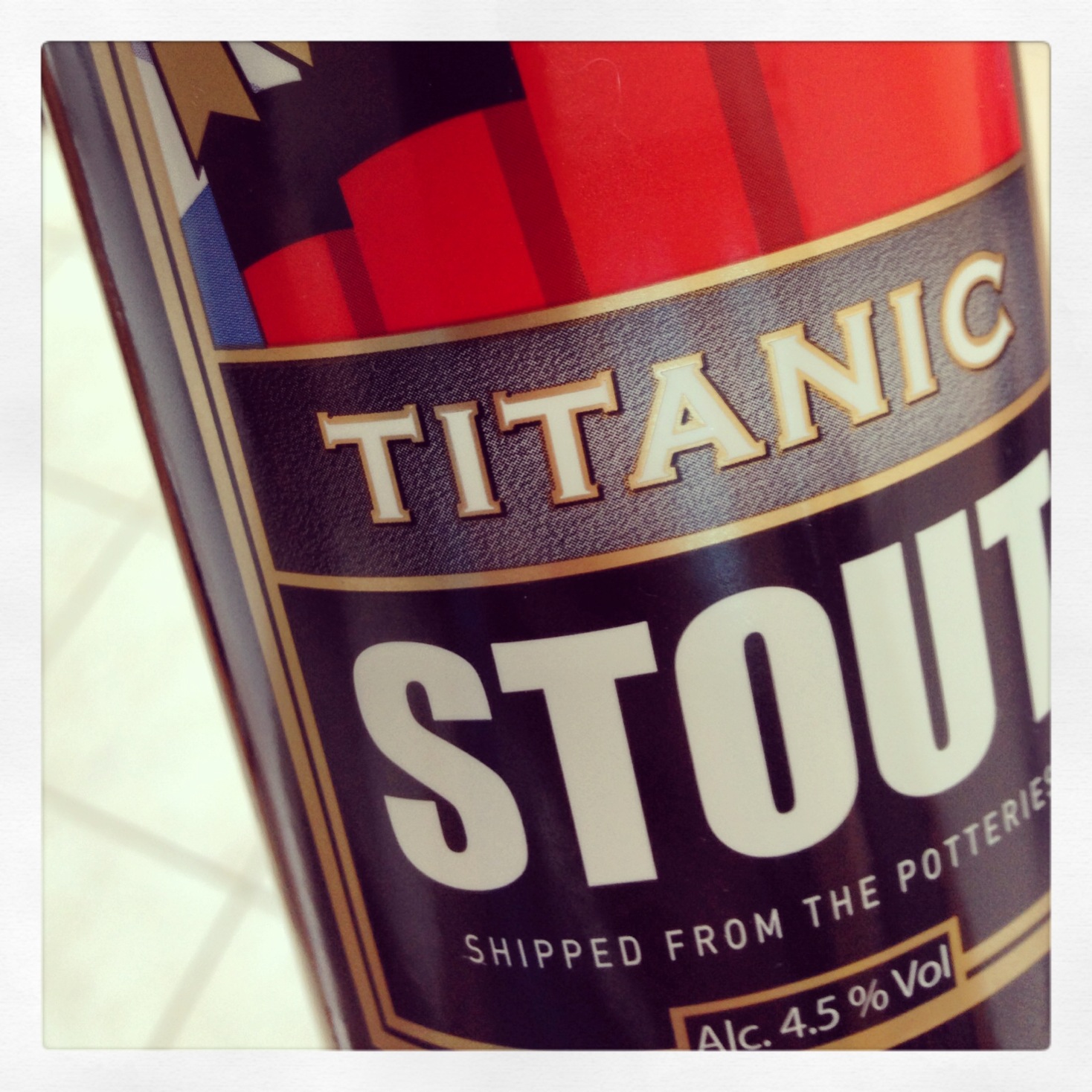
It seemed strange to me though that such a big city, such an industrialised city, didn’t have a brewery of it’s own. Perhaps being so well connected by canal to Burton on Trent and Birmingham was the reason, but it’s something that has righted itself today. There are a number of brewers in the Potteries with one in particular beginning to make a wider mark. That brewery is Titanic, named after that ship’s captain who was a Burslem man, and its stories and legends infuse the company’s beers without, it must be said, leaving you with that sinking feeling. Quite the opposite in fact: these are grand beers and in an ironic twist, Stoke’s beers are now regularly available on the shelves and bars of Burton on Trent. For research purposes, I drank three.
Dunner be fooled: sinkingly drinkable
Not as green as cabbage looking is not the name of the beer, but Stokey dialect for not being easily fooled. And you won’t be with White Star, a deceptively drinkable classic pale ale (4.8%), with a bready-malt aroma, colour as bright as a new pound coin and a distinct hop bite. This is a beautifully structured beer, from a lovely head formation & retention to a well-hewn body. It drinks well with little assertive aftertaste. It’s a midlands-strength session beer – by that, it’s a session beer of full strength (like Pedigree or Bass – that are considered ‘premium’ or strong elsewhere.)
Captain Smiths strong ale: ‘Gerrus parnt’
Goo dine th’ pub fer us and gerrus parnt; well you probably wouldn’t say that, as off-sales didn’t come until later, but gerrin’ a parnt of Captain Smith’s (5.2%) is well worth the finding. Again, a bold beer; this time with a red-brown colour; the maltiness and alcohol conducive to a lovely head and lacing. To taste, there’s a gentle natural carbonation from secondary conditioning and a mild, chewy toffee flavour with perhaps, a touch of liqourice in the background giving that slightly bitter moreishness. Well rounded, well brewed, fit for a captain.
Dunner gab on… sup up.
Dunner rattle on duck; well I’ll try not to, but Titanic Stout (4.5%) is a cracking, secondary conditioned classic. You should tack yer tarme over it: enjoy the pitch black body, with a head the colour of chicken liver pate and just as compact and dense (albeit more pleasant in my view). The aroma wafts out: leafy hops first, followed by roastiness – a nice order, a great combination. To taste, this is a hop forward stout, but not assertively so and deceptively light in taste with a medium body: not heavy and cloying, not light and unsatisfying. As stouts go: it has the robust appearance of a proper old school stout with drinkability; flavour interest and no aggressive aftertaste. The best of the bunch I reckon.
The brewery has pubs too; in that curious thumb-nosing to the Beer Orders, more and more craft breweries are coming full circle and seeing that having a small, high quality pub estate is not a nice to have, but essential. Titanic’s pubs are worth seeking out (http://www.titanicbrewery.co.uk/c/our-pubs) and in particular, it’s worth heading to Burslem, where they’re based. Here, you can not only experience that Potteries’ friendliness but also go beyond the stereotypes and see a fine, stately town. Hidden a bit perhaps, but there all the same. And now they have beers of which the locals can be equally proud.
* ‘Stoke’, ‘The Potteries’ and ‘The Six Towns’ are used interchangeably throughout this post. What is meant is that area containing the conurbations of Stoke-on-Trent, Burslem, Tunstall, Hanley, Fenton, Longton and Newcastle under Lyme, although many would argue about the inclusion of the last one. It’s a bit posh after all.
** Considered a less skilled job than the saggarmaker, and hence the genesis of the lovely term: the saggarmaker’s bottom knocker.

 The Beer Marketing Awards, announced at the end of last year, will celebrate the marketing activity that has changed behaviour and attitudes of drinkers. Because even if you have a jaw-droppingly good beer, without others hearing about it, you might as well whistle in the wind. I remember Michael Jackson, dropping his head slightly and peering at me professorially over his glasses, and telling me (as a marketeer myself – and therefore a sub-species) that he didn’t like the idea of ‘brands’. For him, even using the term ceded too much influence to the marketeer over the brewer. Yet, ironically, what was Michael Jackson himself if not a great brand in the beer world: ‘The Beer Hunter™’ tells you everything. Brands are critical, vital. In fact, brands are business. And marketing is their voice.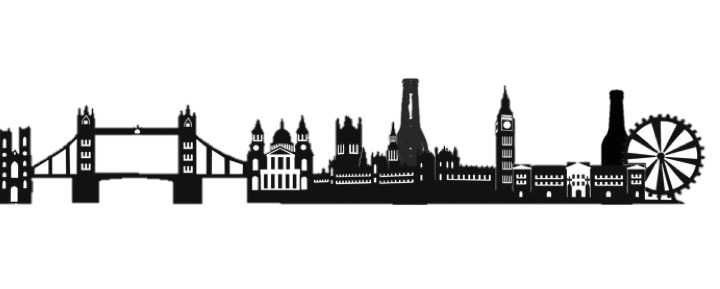




 Beer Tinted Spectacles