Last night I had two pints of Landlord and a pint of Bass. Less said about the latter the better: a brand pillaged by its owner, put out to seed and now wholly bereft of its nutty, malt loaf character, it has moved from sublime to ridiculous. This was brought into sharper relief in a week where it was announced that Bass’s former owner, and now in an ironic twist the parent of new cask leader Doom Bar, are preparing to expand capacity for that brand by 40%. The Landlord was something else though. This beer has made its long march from its home in Keighley not just in terms of miles, but in years. It seems a stubborn beer, letting the punches from lesser spotted craft IPAs and ‘blond’ ales roll off it as it sticks to its knitting. The only concession to modernity seems to be the dissonant inclusion of a web address on their pint pots, but other than that it’s wheatsheaves and stout, ruddy Yeomans all the way. What a fine beer this is: a beer for all occasions yet one with real character too. Deftly handled hopping, a strong malt backbone and a lengthy but not pronounced aftertaste that whistles to your taste buds to come back and finish the job. Shame I spoiled it all by asking for, “a pint of Landlord, Landlord”, inexcusably followed by a slight chortle, then an apology, the latter sparing me from being unceremoniously booted out – and rightly so. Next time I will keep such crassness to myself.
‘Bucket Lists’. Inherently morbid, Gothic things, Bucket Lists. I managed to exorcise them from my thoughts for many a good year but alas, they kept on scritting and scratting away, finally breaking through and floppily landing, like a dark, flappy-winged and rather sadly pathetic Angel of Doom into my Grey Cells. Must be age. They’re pervasive too, especially, and strangely I find, in the world of beer. If ‘The Good Beer Guide’ is a Penguin Classic, ‘100 Beers to Try Before You Die A Mournful And Slow And Agonising Death’ is the Necronomicon.
But there we go, sometimes you have to swim with the tide and Bucket Lists have broken through. I’ve started to mentally compile them. Six weeks in New Zealand. Return to Iceland. Circumnavigate the coast of Britain. Explore Australia. Ride around the North Sea*.
Yet there’s a more persistent – and seemingly banal – one: to explore The Netherlands. Oh, I grant you, it’s hardly one of Eight Wonders of the World. And that’s rather the point. Holland, if I may call it that for brevity’s sake, really shouldn’t be. It is one of the most civilized societies hewn from the least promising beginnings. Most of it lies below sea level, swampy river deltas and the crushing weight of the North Sea held back by some earthen ditches, a few industrial-scale pumps and a little lad with a fatigued finger. To the north, Friesland, was once a collection of islands; around Amsterdam, enormous lands and new cities sprang out from the sea bed of the Zuider Zee. All through damming and pumping.
And whilst it’s a country I have travelled to frequently, it has invariably been on business and the stereotypes persist: laid-back urbanites with their perfect English, sit-up-and-beg bikes and relaxed attitudes to prostitution and soft drugs; outside the cities, rural cheese-makers, wearing wooden clogs and growing tulips under glasshouses you can see from space. Their Belgian neighbours complain that whilst the Belgians have the flair, slightly barking creativity and variety, the Dutch have focus and effectiveness. Take cheese: two sorts, Edam & Gouda, sold the world over. And take beer: Heineken and Grolsch, pale lager beers, sold the world over.
Of course, the truth is different. Just as the Dutch also make wonderful Ewe and Goat milk cheeses (or even smoked Gouda with caraway seeds), so too do Dutch brewers make a wider range of beers. When I worked for Grolsch a few years back, they brewed a range of seasonal beers – de Vierjaargetijdten – which proved that there was more to them as a brewer than pilsner and swingtop bottles. The main variant was Herfst Bok – Autumn beers being a popular category in Holland. Grolsch’s was sweet and malty. Gulpener’s was more hoppy with a green hop-leaf character. Brand’s was dry. There was a winter warmer, Winter Vorst, a citrusy, grassy summer beer, Zomer Goud and my favourite was the well balanced and only marginally more pronounceable, Lente Bok, a spring beer with a strong malt backbone, a lemony freshness and a warming alcoholic kick.
Today, the truth is even more different. Today, craft beers in Holland are blossoming and the craft brewery Grand Daddies, Brouwerij ‘T Ij and Brouwerij de Molen are making an impact outside of their home country. I recently got hold of a couple of de Molen beers and another, a collaboration between the two. T’Ij is based in Amsterdam, a ferry hop across the water from the main train station. If you go to Amsterdam, ignore the ‘delights’ of the Red Light district and get over to their beer garden, it’s fantastic. I’ve not been for a few years, but their beers were always characterful and packed some oomph – their website today reveals a wider range – but all looking as beautiful as I remember. De Molen is south of Amsterdam, in Bodegraven, in the cheese-wielding, tulip-waving farmlands at the centre of the triangle formed by Amsterdam, Utrecht and Rotterdam. And to stereotypical form, the brewery is both named after and is situated in, a windmill.
Here is the evidence that Dutch brewers are now doing variety as well as efficiency, nettle clad yarg not just industrial pseudo-Cheddar. The collaboration between ‘T Ij and de Molen is a Double IPA; a deep, caramel brown beer with a cream-tan head, persistent if not profuse. On breaking the crown, a crisp, malty biscuitiness is foremost, then layers of hop, leafy, green, grapefruity. And if the Dutch deserve their reputation for thriftiness, it was not in evidence here, with four hops – Simcoe, Amarillo, Columbus and Cascade – but not overplayed at all, a well balanced beer working off a dark malt base. A double IPA by name but done with the best of new world hoppy swagger and old world drinkability (and at 9% too – you’d probably not guess). Vuur en Vlaam is not only a great beer – not only, in fact, a terrific beer – but it also enjoys a name to make it famous. Fire and Flame. Sturm und Drang. Cagney and Lacey. Four hops aren’t enough here; it is intensely hopped with six varieties yet, again, retains a quality so often missing in new wave IPAs, a satisfying moreishness. I wish I’d bought more. And finally Zwaart en Wit, black and white. An 8.4% dark IPA. This is not just a dark beer, but jet black with an oil spill head; a head that was effusive with a loose bubble, with roast aromatics leaping up from it. This was perhaps more fire and brimstone than the previous beer. But no: it is handled dexterously: with only a light roastiness to smell, and whole hops bursting through not subdued and not overbearing, and even a juicy citrusiness evident as well. To taste: a happy bitterness, not overdone with a roasty dryness. Three wonderful Dutch beers.
Going back many years, Grolsch had a ground breaking TV campaign. ‘Vakmanschap is meesterschap’ it pronounced: ‘craftsmanship is mastery’. Now it seems, that mantle has moved on.
*This is not as wet as it sounds. You basically follow the east coast of the UK, through the Orkney’s and Shetland, down Norway and Jutland and back around through Germany & Belgium. Ferries for the moist bits, clearly.
The 4th July is a special day on the Old side of the Atlantic; it’s the day my eldest daughter was born. Apparently, it’s of some significance on t’other side too, being the day when (it is generally agreed that) the Declaration of Independence of the United States from Great Britain was adopted by the Continental Congress. For a short time we played with the idea that my daughter should perhaps have a suitably independent (middle) name: like Freedom or Liberty. Then we realised that she would be commemorating those darned Yankee Rebels all her life, which, well, was jolly well not on. It would, I later learn, also mean she was commemorating the day that three of the U.S. Founding Fathers, John Adams, Thomas Jefferson and James Monroe died. All of them, remarkably, passed away on that day. Party poopers. A later President, Calvin Coolidge, on the other hand, also added some mid-party entertainment by being born on the day (not in 1776, I should add).
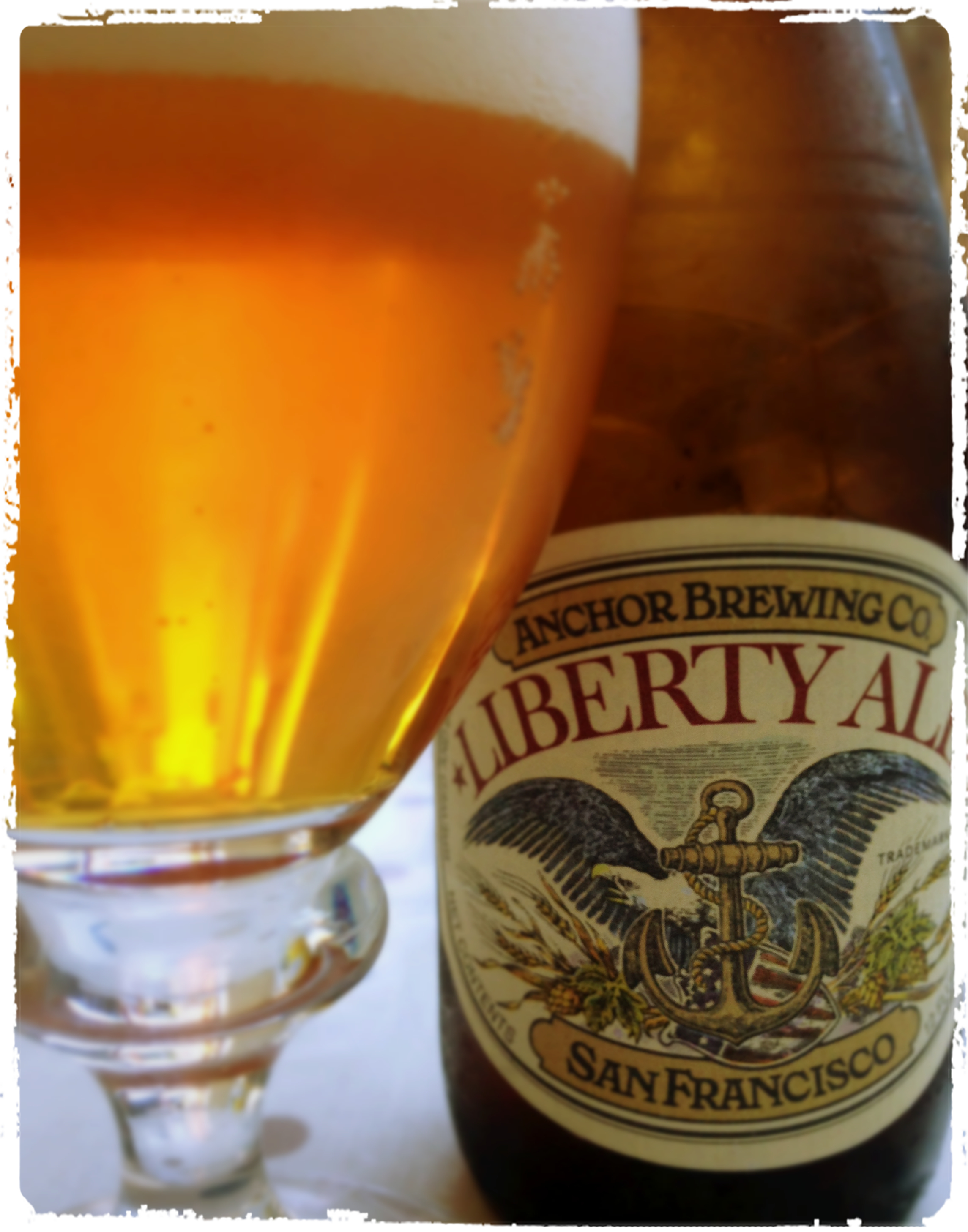
However, there’s an American Beer Day that deserves to be celebrated more: the 18th of April. This was the day in 1975 when the Anchor Brewery brewed a beer that would kick start the U.S. craft beer movement, and in particular a beer style, that of the American Pale Ale. Anchor, in fact describe Liberty Ale on their website as an IPA – if it is, it is more in the English tradition, except for the incredible, resinous, peppering of hops. Liberty Ale remains not only a historical classic, but a beautiful, refined beer.
It starts with the bottle and the label. Many beers sport interesting labels, but Anchor has a bottle shape it owns, mid-height, broad shouldered & rugged yet smoothly curved to appeal to the fairer sex too. The labels, printed on a thick gauge, matt and textured paper are decorated with illustration that harks back to the immediate days of independence. The beer remembers the ride of Paul Revere to warn the rebels in Concord to move their munitions as the British were on to them.
More than anything, Liberty Ale is a celebration, a veneration, of the Cascade Hop. Here, it is used in its whole cone form and you can tell. Everything about this beer is refined – not delicate necessarily – just not overplayed. It’s a luminescent, gold beer, with a bright, white, long lasting head, a natural bead of fine carbonation (no artificial carbonation here) and filigree lacing. Its aroma is pungent and piney but again restrained and leafy. To drink, this is a clean and focused beer, the hop provides beautiful, layers of hoppy, citrusy accents off a rich malty, well structured base. It is in short, sublime.
Little surprise that, just like Paul Revere’s ride, it was the start of something revolutionary.
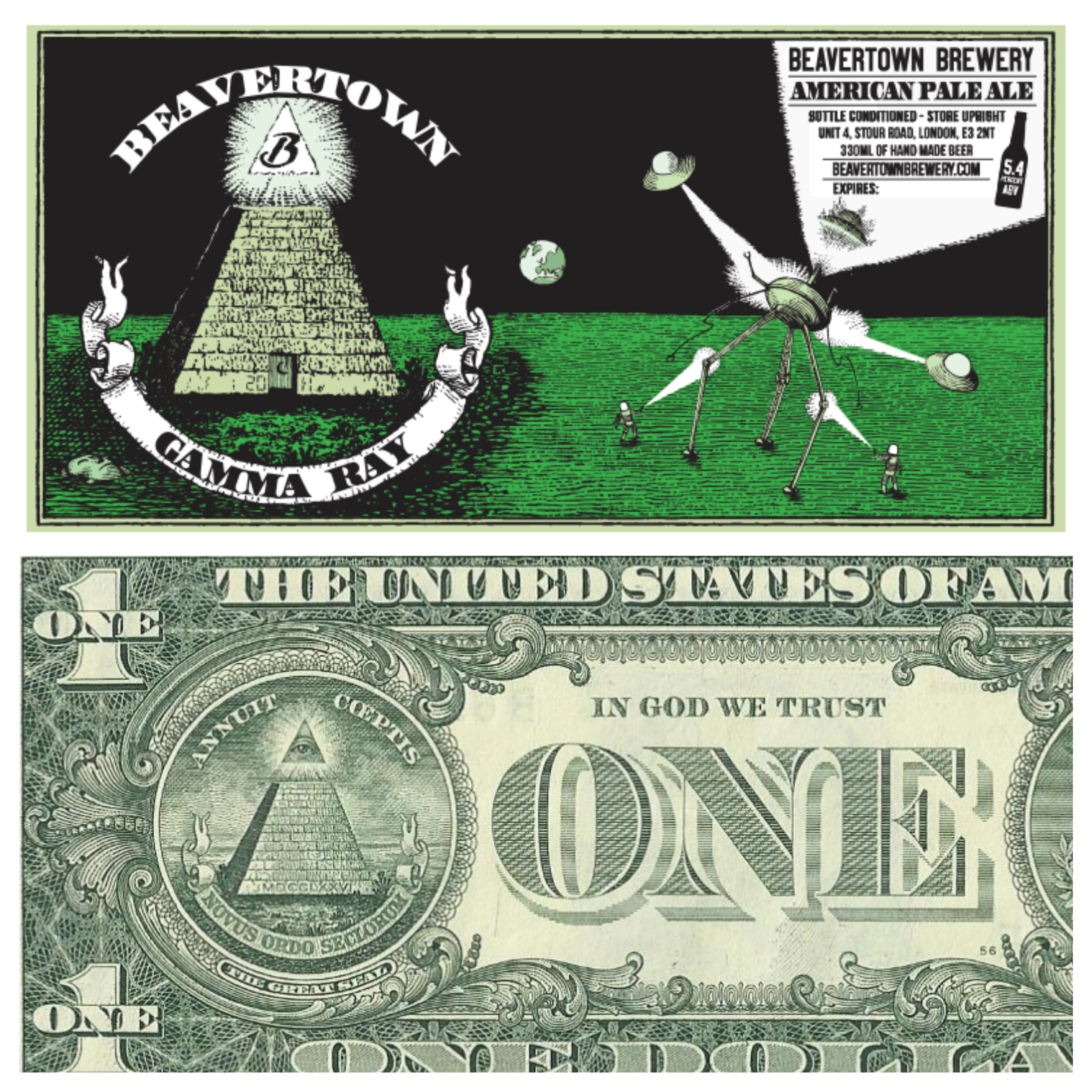
“It got me wondering. Why is the all seeing eye of Lucifer both on their beer bottles and on U.S. Dollar Bills?”
Euston Tap, London, 25th June 2014, draught.
I had an hour to spare before my train back north. Time for one beer and just a half: not enough time for a pint to be confident it would have cleared the system by the time I needed to drive. A beer that needed to count; a beer I had been looking out for: Gamma Ray from the fêted Beavertown Brewery in Hackney (soon to be Tottenham Hale).
It’s a slightly hazy, conker brown India Pale Ale with a sweet, malty nose layered with gooseberry hops (a blend of Columbus, Amarillo, Magnum and Bravo apparently – the latter being a new one to me). To taste, full on bitterness (I learnt later, 45 IBU) that reaches from the first taste through to the aftertaste. It’s a choppy, savoury bitterness: not sophisticated, nor lithe, but punchy and drinkable for such a bitter beer. Oh. And it got me wondering. Why is the all seeing eye of Lucifer both on their beer bottles and on U.S. Dollar Bills? Is there some communion of Ley Lines in East London? Does this influence the beer?
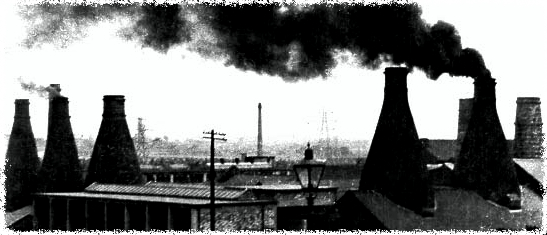
The six towns of the Potteries don’t have a reputation for being the most picturesque place roundabouts. Ask outsiders their opinion and you tend to get the old, “…but they’re such friendly people” response, which, when it’s clear that you’re enquiring about the architectural merits of Blurton or Sneyd Green, is such an obvious distraction answer that it doesn’t wash. Saying that, Potteries’ folk are really friendly in my experience – the friendliness that is borne out of close friends and families working cheek by jowl for generation upon generation; the friendliness borne out of industrial disintegration; the friendliness borne out of, let’s be honest, poverty. Unlike many British towns and cities built round one industry, at least Stoke* has been spared ‘heritage town’ status. You can see more than the marks of its industrial legacy; there remains a major ceramics industry – not perhaps the scale of the past and certainly in a very different form – but there all the same. Most often, today’s potters are in new(er) factories, but not solely. And the old Potteries’ vista is still there too – the eponymous pot banks pushing up like young asparagus shoots, searching for the air above the skyline – a skyline they once filled with smoke. Or the enormous brick factories, as long as a road, or queuing up along the canal sides. Some of these brutally beautiful buildings still have potteries in them (take a trip to Emma Bridgewater just outside Hanley, as one example, to see the potter’s skills being practiced still http://www.emmabridgewaterfactory.co.uk). It’s a setting, a culture, a way of life that has understandably defined the people of the area.
And where there was heavy industry, there was beer. It might not be the same open roaring fires of steel mills and hammer shops, but it was tiring, back breaking work all the same. Digging, heaping & milling the clay; lumping the wares; stacking the pot banks; making the saggars (and the saggar bottoms**) and the crucial job of firing the bank and judging its progress. Works up a thirst just recounting it.
I’m from the other side of the regional line, in the north west, with the Potteries being south from me, in the very north of the north midlands. It’s a city I’ve known all my life; close enough to feel defensive about it when people have a go but distant enough to be distant when needs be; and too distant to support either Port Vale or Stoke City. Yet, when it came to beer, there was always an attraction to the traditional old Potteries pubs when I was growing up. Round my way, the pubs were either large, ‘developed’ town pubs or country pubs of a more idiosyncratic nature. And my locals were normally Robinson’s or Greenall Whitley (‘I wish I was in Greenall Whitley land’ https://www.youtube.com/watch?v=uzsL6uE1ypg). But Stoke: well it was the land of the big Midland brewers: Bass Worthington, Ansell’s, Marston’s and ‘Jolly’ pub names: The ‘Jolly Carter’, the ‘Jolly Collier’ and of course, ‘The Jolly Potter’. And many of the pubs were, well, just public…houses. Go in the front door, left for the public bar, right for the lounge; two rooms and two beer choices, maybe three if the lager was on, and perhaps a bottle of Mann’s Brown or Bass No.1 behind the bar. And not much else. My, it was exotic.
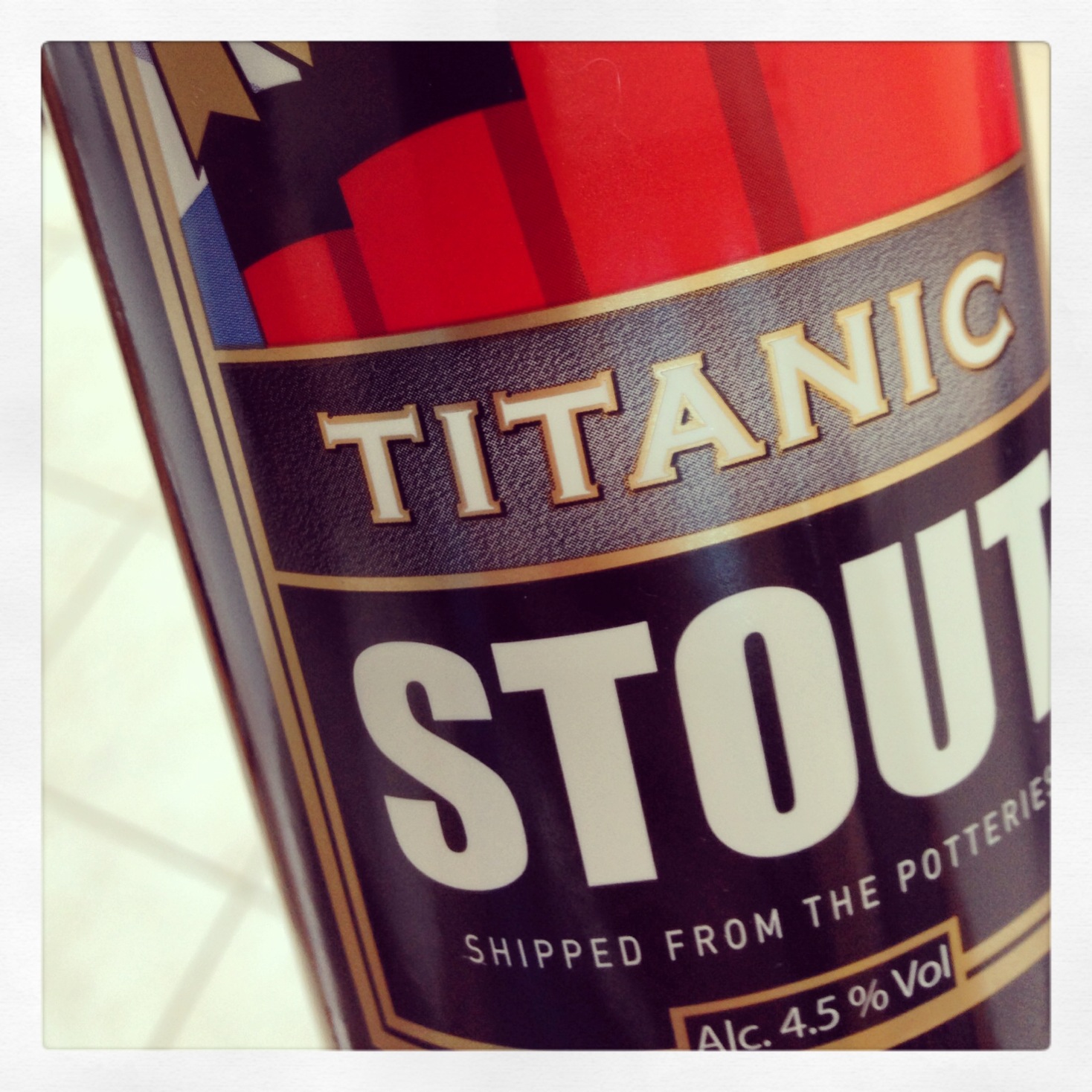
It seemed strange to me though that such a big city, such an industrialised city, didn’t have a brewery of it’s own. Perhaps being so well connected by canal to Burton on Trent and Birmingham was the reason, but it’s something that has righted itself today. There are a number of brewers in the Potteries with one in particular beginning to make a wider mark. That brewery is Titanic, named after that ship’s captain who was a Burslem man, and its stories and legends infuse the company’s beers without, it must be said, leaving you with that sinking feeling. Quite the opposite in fact: these are grand beers and in an ironic twist, Stoke’s beers are now regularly available on the shelves and bars of Burton on Trent. For research purposes, I drank three.
Dunner be fooled: sinkingly drinkable
Not as green as cabbage looking is not the name of the beer, but Stokey dialect for not being easily fooled. And you won’t be with White Star, a deceptively drinkable classic pale ale (4.8%), with a bready-malt aroma, colour as bright as a new pound coin and a distinct hop bite. This is a beautifully structured beer, from a lovely head formation & retention to a well-hewn body. It drinks well with little assertive aftertaste. It’s a midlands-strength session beer – by that, it’s a session beer of full strength (like Pedigree or Bass – that are considered ‘premium’ or strong elsewhere.)
Captain Smiths strong ale: ‘Gerrus parnt’
Goo dine th’ pub fer us and gerrus parnt; well you probably wouldn’t say that, as off-sales didn’t come until later, but gerrin’ a parnt of Captain Smith’s (5.2%) is well worth the finding. Again, a bold beer; this time with a red-brown colour; the maltiness and alcohol conducive to a lovely head and lacing. To taste, there’s a gentle natural carbonation from secondary conditioning and a mild, chewy toffee flavour with perhaps, a touch of liqourice in the background giving that slightly bitter moreishness. Well rounded, well brewed, fit for a captain.
Dunner gab on… sup up.
Dunner rattle on duck; well I’ll try not to, but Titanic Stout (4.5%) is a cracking, secondary conditioned classic. You should tack yer tarme over it: enjoy the pitch black body, with a head the colour of chicken liver pate and just as compact and dense (albeit more pleasant in my view). The aroma wafts out: leafy hops first, followed by roastiness – a nice order, a great combination. To taste, this is a hop forward stout, but not assertively so and deceptively light in taste with a medium body: not heavy and cloying, not light and unsatisfying. As stouts go: it has the robust appearance of a proper old school stout with drinkability; flavour interest and no aggressive aftertaste. The best of the bunch I reckon.
The brewery has pubs too; in that curious thumb-nosing to the Beer Orders, more and more craft breweries are coming full circle and seeing that having a small, high quality pub estate is not a nice to have, but essential. Titanic’s pubs are worth seeking out (http://www.titanicbrewery.co.uk/c/our-pubs) and in particular, it’s worth heading to Burslem, where they’re based. Here, you can not only experience that Potteries’ friendliness but also go beyond the stereotypes and see a fine, stately town. Hidden a bit perhaps, but there all the same. And now they have beers of which the locals can be equally proud.
* ‘Stoke’, ‘The Potteries’ and ‘The Six Towns’ are used interchangeably throughout this post. What is meant is that area containing the conurbations of Stoke-on-Trent, Burslem, Tunstall, Hanley, Fenton, Longton and Newcastle under Lyme, although many would argue about the inclusion of the last one. It’s a bit posh after all.
** Considered a less skilled job than the saggarmaker, and hence the genesis of the lovely term: the saggarmaker’s bottom knocker.

 Last night I had two pints of Landlord and a pint of Bass. Less said about the latter the better: a brand pillaged by its owner, put out to seed and now wholly bereft of its nutty, malt loaf character, it has moved from sublime to ridiculous. This was brought into sharper relief in a week where it was announced that Bass’s former owner, and now in an ironic twist the parent of new cask leader Doom Bar, are preparing to expand capacity for that brand by 40%. The Landlord was something else though. This beer has made its long march from its home in Keighley not just in terms of miles, but in years. It seems a stubborn beer, letting the punches from lesser spotted craft IPAs and ‘blond’ ales roll off it as it sticks to its knitting. The only concession to modernity seems to be the dissonant inclusion of a web address on their pint pots, but other than that it’s wheatsheaves and stout, ruddy Yeomans all the way. What a fine beer this is: a beer for all occasions yet one with real character too. Deftly handled hopping, a strong malt backbone and a lengthy but not pronounced aftertaste that whistles to your taste buds to come back and finish the job. Shame I spoiled it all by asking for, “a pint of Landlord, Landlord”, inexcusably followed by a slight chortle, then an apology, the latter sparing me from being unceremoniously booted out – and rightly so. Next time I will keep such crassness to myself.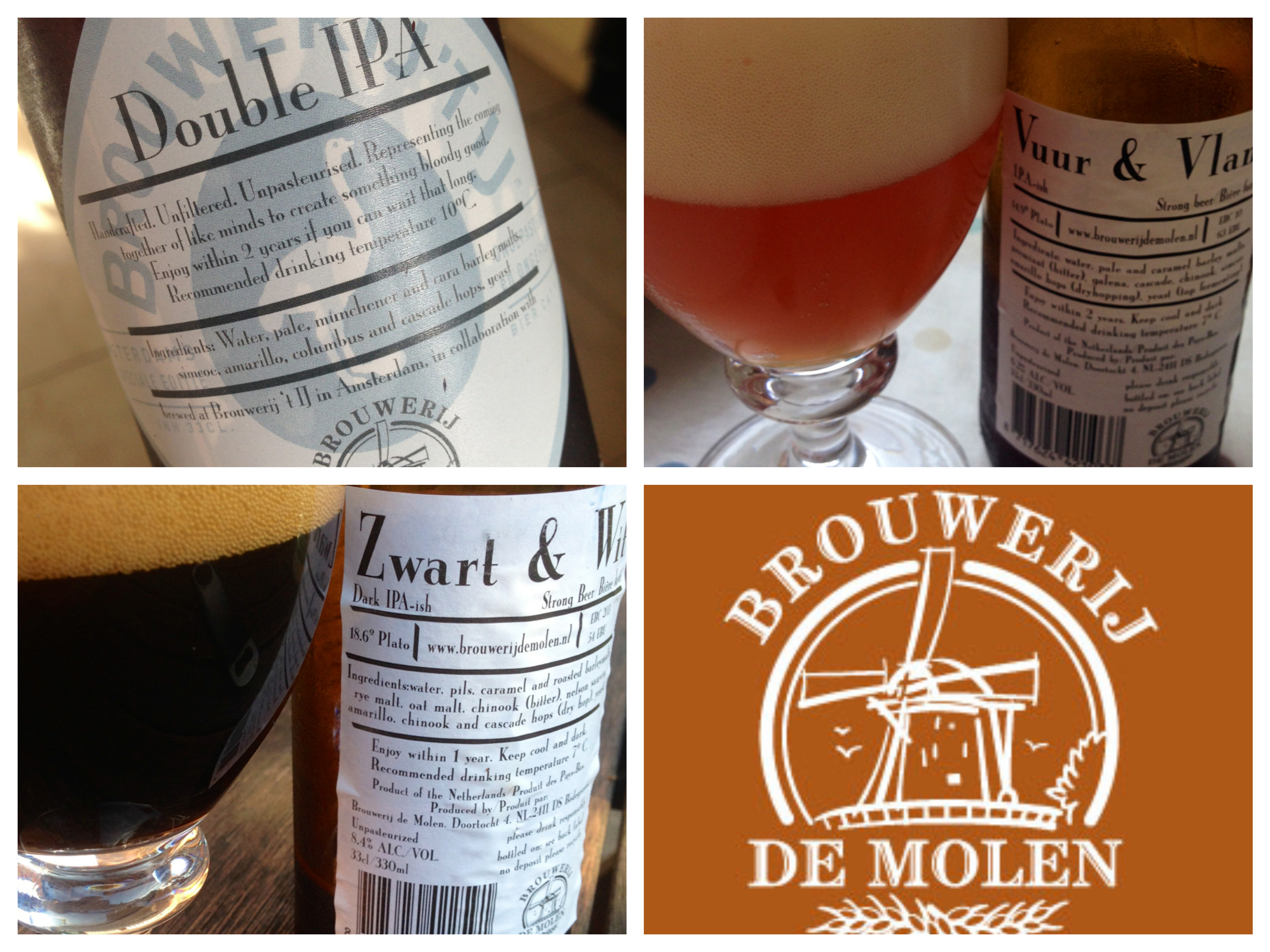


 Beer Tinted Spectacles